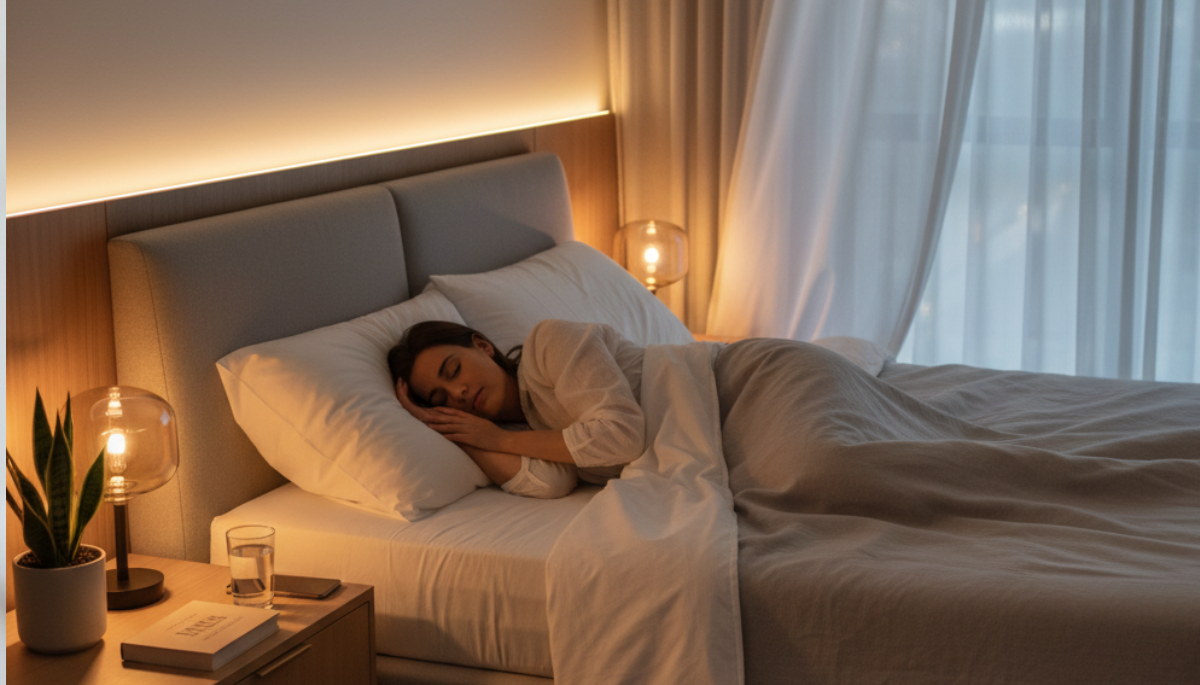
Sleep quality is the measure of how effectively your sleep restores your body and mind—going far beyond total hours in bed. According to the National Institutes of Health, high-quality sleep involves falling asleep within 30 minutes, waking up at most once per night, and spending at least 85% of your time in bed actually asleep. Below, you’ll find the seven most effective, science-backed strategies to transform your nights.
Sleep quality
Every morning, millions of Americans wake up feeling drained, foggy, and far from rested—even after spending eight or more hours in bed. The problem isn’t necessarily the quantity of sleep but its quality. Sleep quality reflects how deeply, continuously, and restoratively you sleep each night. When sleep quality suffers, the consequences ripple across every dimension of health: cognitive performance drops, emotional stability weakens, metabolic function declines, and long-term disease risk climbs.
The Centers for Disease Control and Prevention reports that roughly one in three American adults consistently fails to obtain adequate restorative sleep. That statistic alone helps explain why sleep quality has become a central focus of preventive health research. Scientists now recognize that improving sleep quality can reduce systemic inflammation, strengthen immune memory, enhance memory consolidation, and even extend lifespan.
The sleep strategies outlined in this article move beyond generic advice like “avoid caffeine” or “go to bed earlier.” Each recommendation is grounded in current research from sleep neuroscience, circadian biology, and behavioral sleep medicine—disciplines that have accelerated our understanding of what truly drives restorative rest. By applying these seven strategies, you can stop chasing sleep and start achieving genuine sleep quality.
1. Anchor Your Circadian Rhythm with Precision Timing
Sleep quality begins with circadian alignment. The suprachiasmatic nucleus—a small cluster of neurons in the hypothalamus—functions as the brain’s master clock, coordinating cycles of alertness, hormone release, body temperature, and metabolism across the 24-hour day. When your daily schedule consistently reinforces this internal timing, falling asleep and staying asleep becomes easier. When you disrupt it with irregular bedtimes, late-night screen exposure, or weekend oversleeping, sleep quality degrades regardless of how many hours you log in bed.
Research published by the American Academy of Sleep Medicine demonstrates that individuals with high variability in sleep-wake timing exhibit significantly lower sleep quality scores, even after controlling for total sleep duration. The mechanism involves melatonin onset—the biochemical signal that initiates the sleep cascade. An irregular schedule delays melatonin release on some nights and advances it on others, creating a state of chronic circadian misalignment that fragments deep and REM sleep.
Practical circadian anchoring
- Set a fixed wake-up time seven days a week. This single habit is more powerful than a fixed bedtime because morning light exposure is the strongest circadian synchronizer available.
- Within 30 minutes of waking, expose your eyes to natural outdoor light for at least 10–15 minutes. This suppresses residual melatonin and sets an 11–12 hour countdown to the next evening’s melatonin surge.
- Avoid sleeping in more than one hour past your weekday wake time, even on weekends. Larger deviations reset your circadian rhythm in a way that mimics cross-time-zone travel.
- If you must shift your schedule temporarily, adjust in 15–30 minute increments per day rather than making abrupt changes.
A 2025 study in Sleep Medicine Reviews examined shift workers and frequent travelers and found that consistent morning light exposure improved sleep quality as effectively as low-dose melatonin supplementation, with the added benefit of enhanced daytime alertness.
Read also: “Natural Remedies for Anxiety: 7 Proven Methods to Calm Your Mind”
2. Engineer a Sleep-Optimized Bedroom Environment
The bedroom environment operates as a set of sensory inputs that either promote or inhibit the neurobiological transition into sleep. Temperature, sound, light, humidity, and tactile sensations all feed directly into brainstem arousal systems that determine how quickly you fall asleep and how deeply you stay there.
Temperature regulation and sleep quality
Core body temperature follows a predictable circadian curve, dropping by roughly 1–2°F in the hours leading up to sleep and reaching its lowest point in the early morning. This temperature decline is both a signal for sleep onset and a prerequisite for sustained deep sleep. A bedroom that is too warm prevents adequate heat dissipation, increasing nighttime arousals and reducing time in slow-wave sleep.
Sleep Foundation guidelines recommend maintaining a bedroom temperature between 65°F and 68°F for optimal sleep quality. This range facilitates the natural drop in core temperature without triggering thermoregulatory defenses like shivering or sweating. Individual preferences vary slightly, but temperatures above 75°F consistently correlate with more fragmented sleep in controlled laboratory studies.
The role of darkness and sound
Light exposure at night suppresses pineal melatonin secretion through intrinsically photosensitive retinal ganglion cells, which respond most strongly to blue wavelengths around 480 nanometers. Even dim light—under 10 lux—can measurably delay melatonin onset and shorten its total duration. Blackout curtains, sleep masks, and removing or covering all LED indicators in the bedroom remove this source of circadian disruption.
Auditory disturbances are equally disruptive. Environmental noise above approximately 35 decibels fragments sleep architecture and reduces the percentage of time spent in REM and slow-wave sleep. White-noise machines, earplugs, or acoustic masking devices generate consistent background sound that raises the arousal threshold for sudden noises without interfering with sleep itself.
Comparison table: bedroom optimization priorities and impact on sleep quality
| Optimization | Mechanism | Approximate Impact on Sleep Quality |
|---|---|---|
| Temperature reduction (65°F–68°F) | Facilitates core body temperature decline; reduces arousals | High — shortens sleep onset by ~10–15 min |
| Blackout curtains / sleep mask | Prevents melatonin suppression from ambient light | High — increases melatonin duration by up to 90 min |
| White noise or acoustic masking | Raises arousal threshold to environmental noise | Moderate to high — reduces nighttime awakenings |
| Removal of LED indicators | Eliminates low-level blue-light exposure | Moderate — supports continuous melatonin output |
| Supportive mattress and breathable bedding | Reduces pressure-point discomfort and heat retention | Moderate — fewer position shifts and micro-arousals |
ExportarSleep quality is the direct output of the sensory conditions you create in your bedroom. Each element works synergistically: a cool, dark, quiet room signals safety and facilitates the physiological cascade that produces deep, uninterrupted rest.
3. Design a Neurobiological Wind-Down Protocol
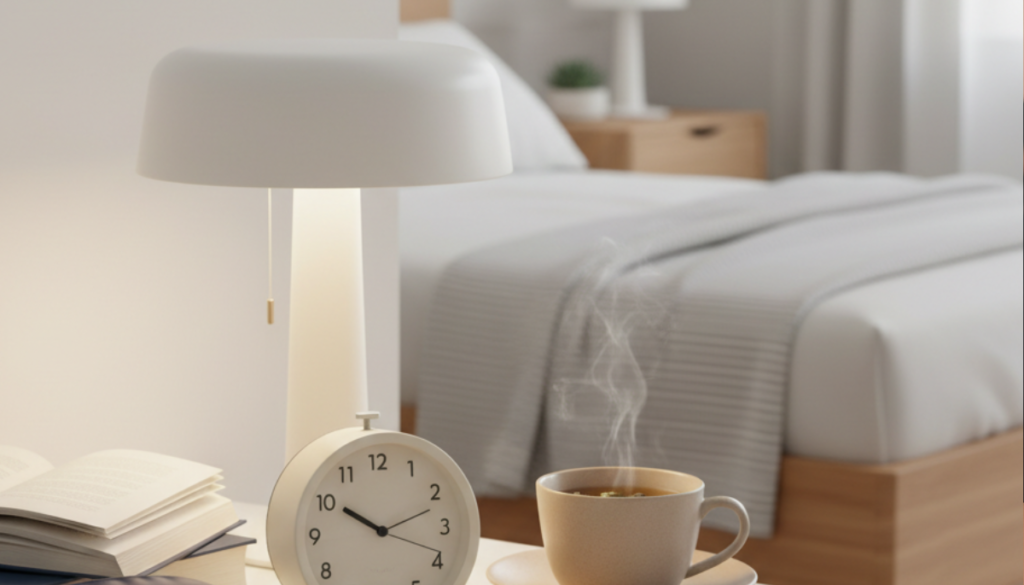
Falling asleep is not an on-off switch. It is a gradual neurochemical transition that requires parasympathetic activation—the relaxation response—to override the sympathetic arousal that dominates waking hours. A structured wind-down protocol bridges this gap, progressively lowering cortisol, reducing cognitive engagement, and priming the brain’s sleep-generating systems.
The neuroscience of transition
The locus coeruleus, a brainstem nucleus responsible for norepinephrine release, maintains wakefulness and alertness during the day. For sleep to initiate, locus coeruleus firing must decline substantially—a process that does not happen abruptly. Activities that engage goal-directed attention, emotional processing, or problem-solving keep this system active, explaining why last-minute email checks or intense conversations delay sleep onset even when you feel tired.
The protocol that follows is designed to deactivate waking systems in sequence:
Cognitive disengagement phase (60–90 minutes before bed)
- Complete all work-related tasks and close all screens that emit significant blue light. If screen use is unavoidable, wear amber-tinted blue-light-blocking glasses validated to filter wavelengths below 530 nanometers.
- Write a brief “brain dump” list of pending tasks or worries for the following day. Research from Baylor University shows that this practice reduces sleep onset latency by approximately nine minutes compared to writing about completed tasks, likely by offloading working memory burden.
- Avoid emotionally charged conversations, suspenseful media, or competitive games.
Physiological unwinding phase (30–60 minutes before bed)
- Take a warm bath or shower. The subsequent drop in core body temperature as you cool off afterward is a potent sleep-promoting signal.
- Practice diaphragmatic breathing: inhale slowly through the nose for four seconds, hold for four, and exhale through pursed lips for six to eight seconds. This breathing pattern shifts autonomic balance toward parasympathetic dominance within minutes.
- Gentle stretching or restorative yoga poses, particularly those that involve forward folds and supported reclining, stimulate vagal tone and reduce heart rate.
Transition ritual (final 5–15 minutes)
- Read from a physical book under dim, warm-toned lighting. The key is selecting material that is engaging enough to hold attention but not so stimulating that it activates the locus coeruleus. Fiction often works better than self-improvement or work-related nonfiction.
- If the mind remains active, a body-scan meditation—systematically relaxing muscle groups from head to toe—provides a structured cognitive exit ramp.
People who implement a full 60–90 minute wind-down routine report greater improvements in sleep quality than those who rely solely on isolated interventions like avoiding caffeine or reducing noise. The protocol’s effectiveness lies in its cumulative neurobiological effect rather than any single component.
4. Align Nutrition, Stimulants, and Meal Timing with Sleep Biology
What and when you consume food, beverages, and stimulants directly modulates the neurotransmitter systems and metabolic processes that support or undermine sleep quality. Caffeine, alcohol, meal composition, and nutrient timing each influence sleep architecture through distinct mechanisms—and their combined effect can be the difference between restorative sleep and a night of fragmented rest.
Caffeine: timing and adenosine dynamics
Caffeine promotes wakefulness primarily by blocking adenosine receptors in the brain. Adenosine is a nucleoside that accumulates progressively during waking hours, creating what scientists call “sleep pressure.” When adenosine binds to its receptors, it suppresses arousal-promoting neurons and facilitates sleep onset. Caffeine occupies those receptors without activating them, effectively masking sleep pressure without reducing it.
The half-life of caffeine ranges from three to seven hours in most adults, depending on genetic variations in the CYP1A2 enzyme. This means that a 2:00 PM coffee may leave roughly 25–50% of its caffeine still circulating in your bloodstream at 10:00 PM—enough to measurably suppress deep sleep even in people who subjectively feel they sleep fine after evening caffeine.
Practical caffeine guidelines for sleep quality
- Establish an absolute caffeine cutoff time no later than 2:00 PM, and earlier for those who are caffeine-sensitive or have a slow CYP1A2 variant.
- Be aware of hidden caffeine sources: dark chocolate, pre-workout supplements, some pain relievers, and even decaf coffee (which retains 3–7% of original caffeine).
- Gradual reduction is more sustainable than abrupt elimination. Reduce consumption by roughly 50 milligrams every three days to avoid withdrawal headaches while trending toward earlier cutoff times.
Alcohol: the REM sleep disruptor
Alcohol is widely misunderstood as a sleep aid. While its GABAergic effects do accelerate sleep onset, the sleep that follows is neurobiologically compromised. Alcohol suppresses REM sleep during the first half of the night and causes a REM rebound effect during the second half, often accompanied by increased arousals, elevated heart rate, and early-morning awakening.
A study from the University of Melbourne demonstrated that alcohol consumption within four hours of bedtime reduced nighttime growth hormone secretion—a key anabolic signal that peaks during deep sleep—by up to 53%. For sleep quality, the recommendation is straightforward: avoid alcohol entirely in the hours before bed, and when you do drink, limit consumption to earlier in the day with food.
Evening nutrition and macronutrient composition
Large meals within two to three hours of bedtime increase metabolic heat production and can cause gastroesophageal reflux, both of which fragment sleep. Conversely, going to bed hungry elevates ghrelin (the hunger hormone) and cortisol, which also interfere with sleep quality.
The optimal evening eating pattern emphasizes:
- Moderate protein with tryptophan-containing foods (turkey, eggs, oats, pumpkin seeds), which provide substrate for serotonin and melatonin synthesis.
- Complex carbohydrates that facilitate tryptophan transport into the brain via insulin-mediated mechanisms.
- Limited saturated fat, which delays gastric emptying and has been linked to less slow-wave sleep.

5. Use Physical Activity and Light Exposure as Daytime Drivers of Nighttime Rest
Exercise and light form two of the most potent non-pharmacological tools for building sleep quality—not through their immediate effects near bedtime, but through daytime mechanisms that set the conditions for deep, continuous sleep hours later.
Exercise timing, intensity, and sleep architecture
Exercise raises core body temperature, increases adenosine accumulation, and stimulates mitochondrial biogenesis in muscle tissue—each of which feeds into sleep regulation. Higher daytime adenosine levels, driven by physical and cognitive activity, create stronger sleep pressure by evening. At the same time, the post-exercise drop in body temperature promotes deeper sleep once you lie down.
The relationship between exercise and sleep quality follows several patterns:
Moderate aerobic exercise (walking, cycling, swimming) performed for 30–50 minutes consistently improves sleep quality and increases the percentage of deep sleep, particularly in middle-aged and older adults. Resistance training also improves sleep quality and has the added benefit of reducing sleep-disrupting joint and muscle pain when performed regularly.
Timing matters less than consistency, but some individuals find that intense exercise within 90 minutes of bedtime raises core temperature and sympathetic tone enough to delay sleep onset. For these individuals, morning or afternoon sessions allow more time for the post-exercise temperature decline. However, others experience no negative effect from evening exercise. The practical recommendation is to track your own response; if you sleep worse after late workouts, shift them earlier by two hours.
Morning light as a foundational sleep quality driver
Outdoor light exposure within the first hour of waking is one of the most underutilized yet powerful interventions available for sleep quality. Morning sunlight contains high-intensity blue wavelengths that suppress residual melatonin and synchronize the suprachiasmatic nucleus, thereby setting the countdown to evening melatonin onset approximately 12–14 hours later.
The dose required for meaningful circadian entrainment is modest: on a clear, sunny day, 10–15 minutes of outdoor light with eyes open (no sunglasses) is sufficient. On overcast days, extend exposure to 25–30 minutes. The key requirement is outdoor light: even a bright indoor environment delivers intensities at least ten times lower than direct or indirect sunlight, and windows filter a significant portion of the relevant wavelengths.
When morning light exposure is paired with consistent physical activity, the combined effect on sleep quality is larger than either intervention alone. These daytime behaviors build the neurochemical and circadian foundation upon which all nighttime sleep strategies depend.
6. Address Cognitive Hyperarousal: the Hidden Driver of Insomnia and Poor Sleep Quality
Among the most prevalent yet underrecognized barriers to sleep quality is cognitive hyperarousal—a state of persistent mental activation characterized by racing thoughts, worry, and difficulty disengaging attention from waking concerns.
Unlike physiological hyperarousal, which manifests as elevated heart rate or muscle tension, cognitive hyperarousal may coexist with apparent physical calm, making it easy to miss as a root cause of sleep disruption.
The brain’s default mode network—a set of interconnected regions active during self-referential thought and mind-wandering—normally shifts into a different configuration during sleep. In individuals with high cognitive hyperarousal, this network remains abnormally connected even after sleep onset, producing a subjective experience of “sleeping but not resting.”
Neuroimaging studies confirm that this persistent activation correlates with reduced slow-wave activity and lower sleep quality self-ratings.
Cognitive Behavioral Therapy for Insomnia (CBT-I) is the first-line treatment recommended by the American College of Physicians for chronic insomnia, and its core components directly target cognitive hyperarousal. The technique includes:
Stimulus control: re-associating the bed exclusively with sleep and intimacy. If you are awake for more than 20 minutes, get up and engage in a quiet, low-stimulation activity until genuinely sleepy, then return to bed. This prevents the bed from becoming a conditioned cue for wakefulness and frustration.
Cognitive restructuring: identifying and challenging catastrophic thoughts about sleep (“If I don’t sleep tonight, I’ll ruin my entire day”) that amplify arousal through anxiety spirals. Replacing these with accurate, neutral statements lowers the stakes emotionally and reduces the vigilance that blocks sleep onset.
Sleep restriction therapy (clinically supervised): temporarily limiting time in bed to match actual average sleep duration, then gradually expanding it. This consolidates sleep into a more continuous, higher-quality block and strengthens the bed-sleep association.
Mindfulness-based cognitive therapy has also shown strong results for sleep quality. A randomized trial published in JAMA Internal Medicine found that a six-week mindfulness program produced improvements in sleep quality comparable to those achieved with CBT-I alone, likely through enhanced metacognitive awareness that allows individuals to observe arousing thoughts without engaging them.
For those who do not have access to formal CBT-I, several self-directed approaches can reduce cognitive hyperarousal:
- Schedule a daily “worry window” earlier in the evening—a dedicated 15–20 minutes to write down concerns, problem-solve actively, and close the session deliberately. This compartmentalization reduces rumination at bedtime.
- Practice constructive worrying: for each concern, write one concrete action step you can take tomorrow, then note that no further problem-solving will be available until morning.
- Use thought-labeling meditation: when a thought arises while falling asleep, mentally note “thinking” without following its content, then return attention to breath sensations.
Sleep quality often improves more from quieting the mind than from any environmental or behavioral change. Cognitive hyperarousal treatment deserves the same priority as temperature management or caffeine reduction in any comprehensive sleep optimization plan.
7. Leverage Strategic Napping and Address Sleep Disorders Early
The final component of a complete sleep quality strategy involves managing daytime sleep pressure through strategic napping when appropriate—and recognizing the signs that indicate an underlying sleep disorder requiring professional evaluation.
Strategic napping without compromising nighttime sleep
Napping occupies an ambivalent position in sleep medicine. When timed correctly and kept brief, naps can restore alertness and cognitive performance without degrading nighttime sleep quality. When too long, too late, or used as a compensation mechanism for chronic sleep deprivation, naps destabilize sleep architecture and perpetuate the very problems they aim to solve.
The physiology behind effective napping rests on sleep-cycle dynamics. A full sleep cycle lasts approximately 90 minutes in most adults. Waking from deep sleep—which tends to dominate the middle portion of a nap exceeding 30 minutes—produces sleep inertia: a period of grogginess and impaired performance lasting 15–60 minutes after waking. Additionally, long afternoon naps deplete adenosine, reducing the sleep pressure needed for rapid sleep onset at bedtime.
Guidelines for naps that preserve sleep quality:
- Duration: target 10–20 minutes. This stays within lighter sleep stages and avoids deep sleep entry.
- Timing: nap before 2:00 PM. Later naps interfere more substantially with the evening sleep drive because they occur within the “wake maintenance zone,” a period of natural circadian alertness in the late afternoon and early evening.
- Frequency: limit napping to occasions when genuinely needed (acute sleep loss, illness, heavy physical exertion). Daily napping often signals insufficient or poor-quality nighttime sleep rather than a lifestyle preference.
- Environment: nap in the same cool, dark, quiet conditions recommended for nighttime sleep to minimize sleep onset latency.
Recognizing sleep disorders that erode sleep quality
For a significant proportion of individuals, persistent poor sleep quality stems from an undiagnosed sleep disorder rather than inadequate sleep hygiene. These conditions require medical evaluation and targeted treatment, not just behavioral modification.
Obstructive sleep apnea affects an estimated 30 million adults in the United States, with up to 80% of moderate-to-severe cases remaining undiagnosed. The condition involves repeated airway collapse during sleep, causing intermittent oxygen desaturation and frequent arousals—often without the affected person’s awareness.
Loud, chronic snoring, witnessed breathing pauses, morning headaches, and excessive daytime sleepiness are hallmark indicators. Sleep apnea directly degrades sleep quality by preventing sustained deep sleep and REM sleep continuity.
Other sleep disorders that compromise sleep quality include restless legs syndrome, periodic limb movement disorder, and parasomnias such as REM sleep behavior disorder. Each disrupts sleep through different mechanisms but shares the common outcome of fragmented, non-restorative rest.
When sleep quality remains poor despite consistent application of the strategies in this article, a referral to a board-certified sleep medicine specialist and consideration of polysomnography (an overnight sleep study) becomes appropriate. Home sleep tests and in-laboratory studies can identify physiological disruptions invisible to self-observation alone.
Sleep quality is not a luxury reserved for the genetically gifted or the unusually disciplined. It emerges from a set of actionable, scientifically validated strategies that collectively create the conditions your brain and body need to restore themselves each night: circadian consistency, an optimized sensory environment, a structured wind-down protocol, intelligent nutrition and stimulant timing, daytime activity and light exposure, cognitive de-arousal, and proper management of napping and sleep disorders.
Each strategy works best when combined with the others. Improving bedroom temperature alone helps, but combining it with consistent morning light exposure, earlier caffeine cutoff, and a cognitive wind-down routine produces results far greater than any single intervention could deliver. Sleep quality rewards systematic effort.
The most important step is the first one. Choose the strategy that feels most immediately actionable—whether setting a fixed wake-up time tomorrow morning, removing one LED light from your bedroom, or writing a brain-dump list before bed tonight—and implement it without waiting for perfect conditions. Each small improvement in sleep quality compounds across weeks and months into measurable improvements in mood, cognitive function, metabolic health, and overall well-being.
If this article was useful, share it with someone who could benefit from better sleep, and explore our related content on stress management, nutrition, and daily performance optimization. Your next night of deeper, more restorative rest can begin tonight.
Important Disclaimer
The information in this article is for informational and educational purposes only and does not replace evaluation or guidance from a healthcare professional. Always consult a physician before making decisions about your treatment or diagnosis.
FAQ: Sleep Quality
What are the signs of good sleep quality?
Good sleep quality is characterized by falling asleep within 30 minutes of going to bed, waking up at most once per night, spending at least 85% of time in bed asleep, and feeling rested upon waking. These indicators reflect sleep continuity, depth, and restorative value rather than simply counting hours of unconsciousness.
How is sleep quality measured?
Sleep quality is measured both subjectively and objectively. Subjective tools include the Pittsburgh Sleep Quality Index, a validated questionnaire that assesses sleep patterns over a one-month period. Objective measurements involve actigraphy (wearable devices that track movement), and polysomnography (sleep studies that record brain waves, eye movements, muscle activity, heart rhythm, and breathing).
What ruins sleep quality the most?
The strongest disruptors of sleep quality include irregular sleep-wake timing, alcohol before bed, caffeine within eight hours of sleep, screen use without blue-light filtering, environmental noise, and an overly warm bedroom. Cognitive hyperarousal—racing thoughts or worry at bedtime—is also among the most common and underestimated causes of poor sleep quality.
Can exercise before bed hurt sleep quality?
For some individuals, intense exercise within 90 minutes of bedtime can elevate core body temperature and heart rate enough to delay sleep onset. However, many people experience no negative effect from evening exercise. The key is monitoring personal response; if late workouts interfere with your sleep, shift them to morning or afternoon sessions.
Does sleep quality decrease with age?
Sleep quality does change with age—older adults typically experience lighter sleep, more frequent arousals, and less time in deep slow-wave sleep. However, these changes are not inevitable or untreatable. Consistent sleep hygiene, daytime light exposure, physical activity, and addressing medical conditions that disturb sleep can help maintain high sleep quality into older age.
How long does it take to improve sleep quality?
Initial improvements in sleep quality can appear within three to seven days of implementing consistent sleep-wake timing and environmental optimizations. More substantial and sustained changes typically require two to four weeks of continuous habit practice, particularly for interventions that modify circadian rhythms or cognitive arousal patterns.
Does sleep quality affect weight?
Yes, sleep quality directly influences weight regulation through multiple pathways. Poor sleep quality disrupts hunger hormones (increasing ghrelin and decreasing leptin), elevates evening cortisol, reduces insulin sensitivity, and increases cravings for calorie-dense foods—all of which contribute to weight gain over time.

My relationship with health and wellness began on a personal level, looking for practical ways to improve my own routine: more movement, more mindful eating, and basic oral care habits that, over time, made a real difference in my quality of life. It was this ongoing process of learning — testing, researching, and adjusting — that motivated me to share what I learn with others on the same journey.