
Walking benefits include improved cardiovascular health, better weight management, reduced stress, and increased longevity. Research shows that even 7,000 daily steps can significantly lower mortality risk, challenging the popular 10,000-step myth. Understanding what science actually says about step counts helps you build a realistic, sustainable movement habit instead of chasing an arbitrary number.
Most people have heard the same advice for years: walk 10,000 steps a day and you’ll be healthier. It sounds simple, almost too simple to be true — and in some ways, it is. That number didn’t come from a landmark clinical trial. It came from a 1965 Japanese marketing campaign for a pedometer called manpo-kei, which literally translates to “10,000 steps meter.”
Decades later, researchers have finally tested whether that marketing number holds up scientifically. The answer is more nuanced than a round figure. A widely cited study published in JAMA Internal Medicine found that women who walked around 4,400 steps daily had notably lower mortality rates than those who walked 2,700, with benefits continuing to increase up to about 7,500 steps before leveling off . Similarly, a large-scale meta-analysis has reported that walking benefits for reducing all-cause mortality risk begin appearing at much lower step counts than previously assumed, according to guidance from the CDC.
This article breaks down what walking actually does for your heart, brain, metabolism, and long-term health, and gives you a practical framework for building a walking habit that fits your real life rather than an outdated marketing slogan.
What Science Actually Says About Walking and Longevity
The idea that more steps always means more health benefits is only partially true. Research increasingly points to a curve, not a straight line: benefits rise quickly at first, then plateau.
For adults under 60, studies suggest mortality risk reduction continues up to roughly 8,000-10,000 steps per day. For adults over 60, the plateau tends to arrive earlier, often between 6,000 and 8,000 steps. This distinction matters because it means walking benefits are not one-size-fits-all — age, baseline fitness, and existing health conditions all shape how much walking actually helps.
Snippet-ready definition: Walking benefits refer to the measurable physical and mental health improvements associated with regular walking, including reduced cardiovascular disease risk, better blood sugar regulation, improved mood, and lower all-cause mortality.
What’s consistent across nearly every major study is direction, not magnitude: more walking, up to a point, correlates with better health outcomes than a sedentary lifestyle. The World Health Organization recommends at least 150-300 minutes of moderate-intensity activity per week, and brisk walking easily qualifies.

Cardiovascular Walking Benefits
Your heart is one of the biggest beneficiaries of a regular walking routine. Walking is a form of moderate aerobic exercise, which means it strengthens the heart muscle, improves circulation, and helps regulate blood pressure over time.
According to the American Heart Association, just 30 minutes of brisk walking most days of the week can lower the risk of heart disease and stroke. This happens through several mechanisms working together.
Regular walking helps lower LDL (“bad”) cholesterol while raising HDL (“good”) cholesterol. It also improves the elasticity of blood vessels, reducing arterial stiffness that tends to increase with age and inactivity. Over months of consistent practice, resting heart rate often drops as the heart becomes more efficient at pumping blood.
One detail people often overlook: pace matters more than most realize. Brisk walking — fast enough that you can talk but not sing comfortably — produces significantly greater cardiovascular walking benefits than a leisurely stroll, because it pushes heart rate into a moderate-intensity training zone.
Read also: “How Much Water Do You Need Daily? Hydration Guide“
Walking Benefits for Mental Health and Stress Reduction
Physical health tends to dominate the walking benefits conversation, but the mental health impact is just as well documented, if less discussed.
Walking, particularly outdoors, triggers the release of endorphins and reduces circulating levels of cortisol, the body’s primary stress hormone. This is part of why a walk often feels clarifying after a stressful meeting or a difficult conversation — it’s not just a mental reset, it’s a measurable physiological one.
Research has also linked regular walking to reduced symptoms of mild to moderate depression and anxiety. The rhythmic, repetitive nature of walking appears to have a calming effect similar to other forms of moderate aerobic exercise, while the sensory experience of being outdoors adds an additional layer of psychological benefit that treadmill walking alone doesn’t fully replicate.
There’s also a cognitive angle worth highlighting. Short walks, even 10-15 minutes, have been shown to improve focus and creative problem-solving immediately afterward. If you’ve ever solved a stuck problem while walking rather than sitting at a desk, that’s not a coincidence — it’s a documented effect of increased blood flow to the brain during light aerobic activity.
Walking Benefits for Weight Management and Metabolism
Walking is often underestimated as a weight management tool because it burns fewer calories per minute than high-intensity exercise. But this misses the bigger picture: walking is sustainable in a way that intense workouts often aren’t, and sustainability is what actually drives long-term results.
A 30-minute brisk walk burns roughly 150-200 calories depending on body weight and pace. That may sound modest, but consistency compounds. Walking daily for a year, even without changing diet, can create a meaningful caloric deficit over time — and unlike many high-intensity routines, it carries a low risk of burnout or injury that derails progress.
Walking also plays a specific metabolic role beyond calorie burning. Short walks after meals, sometimes called “post-meal walks,” have been shown to reduce blood sugar spikes by helping muscles absorb glucose more efficiently. This makes walking particularly relevant for people managing insulin sensitivity or prediabetes, alongside broader lifestyle guidance from health authorities.
Quick tip: A 10-15 minute walk after a large meal can meaningfully blunt post-meal blood sugar spikes, according to research on postprandial glucose response — a small habit with outsized metabolic benefit.
How Many Steps Do You Actually Need?
Given that the 10,000-step figure isn’t grounded in strong original research, it’s worth looking at what current step-count science actually suggests across different goals.
| Daily Step Range | Associated Benefit Level | Best Suited For |
|---|---|---|
| 4,000-5,000 | Modest reduction in sedentary-related risk | Beginners, older adults, recovery phases |
| 6,000-8,000 | Significant mortality risk reduction | Adults over 60, general health maintenance |
| 8,000-10,000 | Strong cardiovascular and metabolic benefits | Adults under 60, active lifestyle goals |
| 10,000-12,000+ | Marginal additional benefit; supports fitness/weight goals | Athletes, weight-loss focused routines |
This table illustrates a key point: the “right” number of steps depends heavily on age and current health status, not a universal target. Someone in their 70s managing joint issues will see substantial walking benefits from 6,000 steps, while a 30-year-old training for a race may need considerably more to see continued improvement.
Walking Benefits Across Different Age Groups
Walking doesn’t deliver identical benefits at every stage of life. The physiological priorities shift with age, and understanding this helps set realistic expectations.
Young Adults (20s-30s)
For younger adults, walking benefits often center on stress management, weight maintenance, and building a sustainable exercise habit that can be carried into later decades. At this stage, the body typically tolerates higher step counts without added strain, making 8,000-10,000 steps a reasonable target for those pursuing fitness goals.
Middle-Aged Adults (40s-50s)
This is often when cardiovascular walking benefits become most clinically relevant, as risk factors like elevated blood pressure and cholesterol tend to emerge. Regular walking during this period has been associated with slower progression of arterial stiffness and better long-term metabolic markers.
Older Adults (60+)
For older adults, walking benefits shift toward fall prevention, joint mobility, and cognitive maintenance. Lower step counts — often 6,000-7,000 — still produce meaningful mortality risk reduction in this group, and walking remains one of the safest, lowest-impact exercises available for maintaining independence with age.
How to Build a Sustainable Walking Habit
Knowing the walking benefits is one thing; actually building a consistent habit is another. The following steps reflect what tends to work in practice, not just in theory.
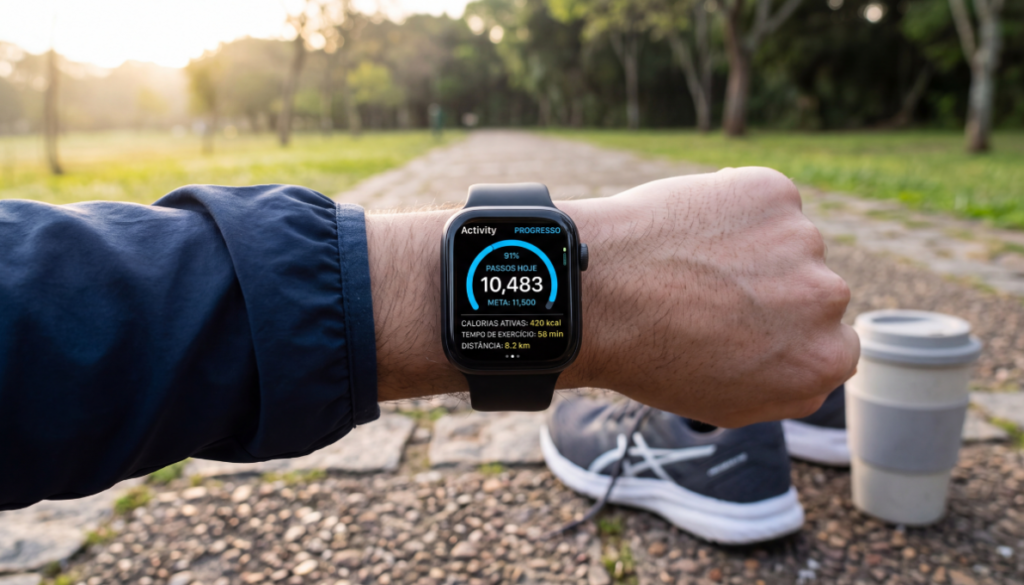
- Start with your current baseline, not a target number. Track your steps for three days without changing anything, then set a goal 10-15% above that average.
- Anchor walks to existing routines, such as a walk after breakfast or during a lunch break, rather than treating them as a separate task to schedule.
- Prioritize consistency over distance in the first few weeks. A 15-minute daily walk builds habit strength faster than an occasional 60-minute walk.
- Increase gradually, adding roughly 500-1,000 steps every one to two weeks rather than jumping straight to a high target.
- Use terrain and pace variation to keep cardiovascular demand appropriate — incorporating inclines or brisk intervals once a comfortable base is established.
- Track progress with a phone or wearable device, since visible feedback has been shown to meaningfully improve adherence to walking programs.
Read also: “Yoga for Flexibility: Poses for Beginners and Advanced“
Common Walking Mistakes That Reduce Benefits
Even a generally healthy activity like walking can be undermined by a few avoidable habits.
- Walking too slowly to reach moderate intensity, which limits cardiovascular walking benefits even at high step counts.
- Ignoring posture, particularly hunching forward while looking at a phone, which can contribute to neck and back strain over time.
- Wearing unsupportive footwear, increasing the risk of joint discomfort during longer walks.
- Treating step count as the only metric that matters, while ignoring pace, duration, and consistency.
- Stopping the habit after missing a few days instead of simply resuming without judgment.
Avoiding these pitfalls doesn’t require major changes — mostly just awareness and small adjustments to an already simple activity.
Walking benefits go far beyond the number on a fitness tracker. The evidence points clearly toward improved cardiovascular health, better mental well-being, more stable blood sugar, and reduced mortality risk — often at step counts well below the popular 10,000-step target. What matters most is consistency and intensity appropriate to your age and fitness level, not chasing a marketing-driven number from decades ago.
If you’re just starting out, focus less on hitting a specific figure and more on building a walk into your daily rhythm. The health returns compound over time, and unlike many fitness trends, walking remains accessible, free, and sustainable for almost everyone.
Important disclaimers
The information in this article is provided for informational and educational purposes only and does not replace the evaluation or guidance of a qualified healthcare professional. Always consult a doctor before making decisions about your exercise routine, treatment, or diagnosis, particularly if you have pre-existing cardiovascular, joint, or metabolic conditions.
Frequently Asked Questions
How many steps a day are actually enough for health benefits?
Research suggests that 6,000-8,000 steps daily provide significant health benefits for most adults, with older adults seeing meaningful risk reduction at the lower end of that range. The traditional 10,000-step target is not required to gain substantial walking benefits.
Can walking alone help with weight loss?
Yes, walking can support weight loss, especially when done consistently over time and combined with dietary awareness. A 30-minute brisk walk burns approximately 150-200 calories, and the cumulative effect over weeks and months can meaningfully contribute to a caloric deficit
Is walking as effective as running for heart health?
Walking can provide comparable cardiovascular benefits to running when done at a similar total energy expenditure, though it typically requires more time to achieve the same effect. Brisk walking specifically has been shown to meaningfully improve heart health markers.
Does walking help reduce stress and anxiety?
Yes, walking reduces cortisol levels and stimulates endorphin release, which can lower feelings of stress and anxiety. Outdoor walking tends to amplify this effect compared to indoor treadmill walking.
What is the best time of day to walk for maximum benefits?
There is no single “best” time scientifically proven superior for everyone, but walking after meals has specific documented benefits for blood sugar regulation. Morning walks are often easier to sustain as a habit due to fewer scheduling conflicts.
Do older adults get the same walking benefits as younger people?
Older adults often see significant mortality risk reduction at lower step counts than younger adults, sometimes around 6,000-7,000 steps daily. Walking also plays a specific role in fall prevention and mobility maintenance in this age group.
Is it better to walk fast or walk longer?
Both approaches offer benefits, but brisk walking tends to provide stronger cardiovascular improvements per minute than slower, longer walks. For time-limited schedules, prioritizing pace over duration is generally more efficient.

My relationship with health and wellness began on a personal level, looking for practical ways to improve my own routine: more movement, more mindful eating, and basic oral care habits that, over time, made a real difference in my quality of life. It was this ongoing process of learning — testing, researching, and adjusting — that motivated me to share what I learn with others on the same journey.