Yoga for flexibility combines controlled stretching, breath work, and sustained holds to gradually lengthen muscles and improve joint range of motion. Beginners benefit most from foundational poses like Cat-Cow and Downward Dog, while advanced practitioners deepen mobility through poses such as Pigeon and Hanumanasana. Consistent practice, not intensity, drives lasting flexibility gains.
Tight hips after a day at a desk, a hamstring that never quite lets you touch your toes, a lower back that complains after a long drive — these are the small, everyday signs of limited flexibility that most people live with without questioning. Yoga offers a practical, low-impact answer. Unlike static stretching alone, it pairs breath control with sustained holds and mindful alignment, which helps the nervous system allow muscles to release tension more fully.
According to Harvard Health Publishing, regular yoga practice is associated with improved flexibility, balance, and muscle strength, alongside benefits for stress reduction. The National Center for Complementary and Integrative Health (NCCIH) also notes that yoga is one of the most studied mind-body practices for musculoskeletal health, including joint mobility and chronic pain management.
This guide breaks down exactly how yoga improves flexibility, which poses work best for beginners, which ones challenge advanced practitioners, and how to structure a realistic practice that produces results without injury.
Read also: “Best Home Workout Routines: No Equipment Needed“
How Yoga Improves Flexibility (The Science Behind It)
Flexibility depends on more than just how “stretchy” a muscle is. It involves the elasticity of connective tissue, the responsiveness of the nervous system, and the range of motion available in each joint. Yoga addresses all three simultaneously, which is part of why it tends to produce more durable results than isolated stretching routines.
Static stretching means holding a muscle at its end range without movement, which is what happens in poses like Forward Fold or Pigeon. Dynamic stretching, seen in flows like Sun Salutations, moves muscles through a range of motion repeatedly, warming tissue before deeper holds.
When a muscle is stretched, sensory receptors called muscle spindles detect the change in length and can trigger a protective contraction — the stretch reflex. Yoga’s slow, breath-paced approach allows this reflex to settle, which is why holding a pose for several breaths tends to produce a deeper release than a quick, forceful stretch. The Mayo Clinic points out that this combination of breath awareness and gradual loading is one reason yoga is often better tolerated than high-intensity stretching for people with stiff joints or chronic tension.
Consistency matters more than depth. Connective tissue adapts slowly, over weeks and months, not single sessions. This is why someone who practices 15 minutes daily for a month will typically see more lasting change than someone who does one intense 90-minute class per week.
Best Yoga Poses for Beginners
Beginners should prioritize poses that build body awareness and gently open the major areas where stiffness accumulates: hips, hamstrings, shoulders, and spine. Rushing into deep stretches before the body is ready increases injury risk without speeding up progress.
Cat-Cow (Marjaryasana-Bitilasana)
This gentle spinal flow, moving between arching and rounding the back on hands and knees, warms up the entire spine and improves awareness of pelvic movement. It is often used as a starting sequence because it prepares the back for deeper poses without any strain.
Downward-Facing Dog (Adho Mukha Svanasana)
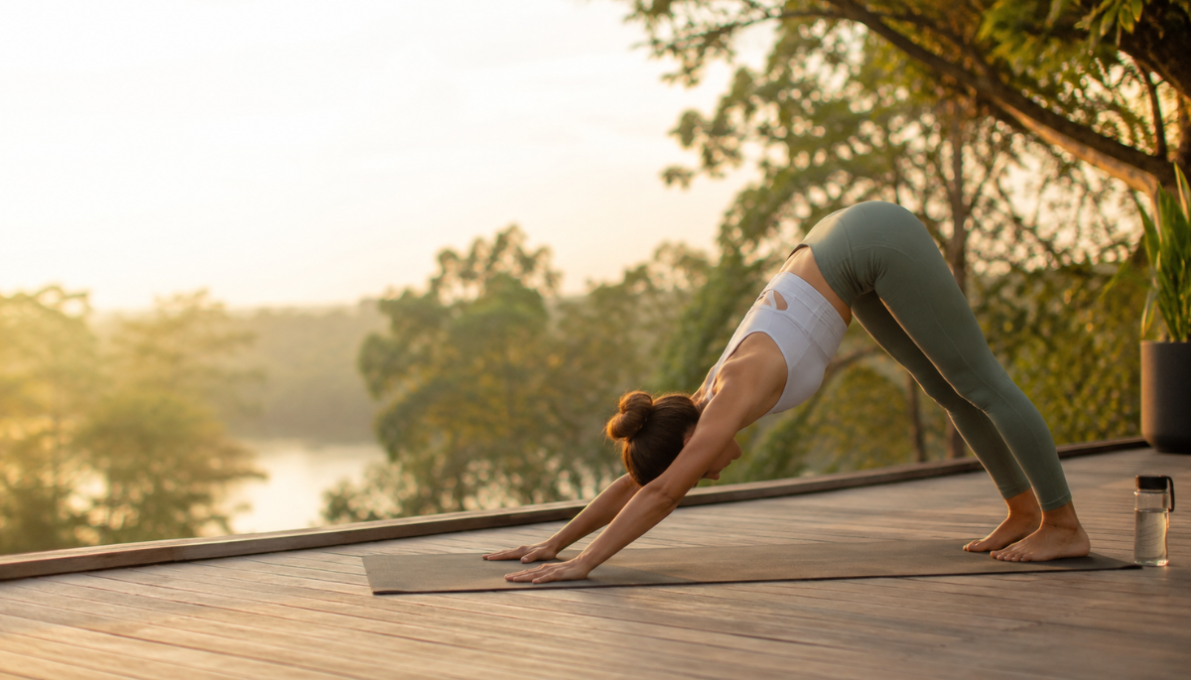
One of the most recognizable yoga poses, Downward Dog stretches the hamstrings, calves, and shoulders simultaneously. Bending the knees slightly is encouraged for beginners with tight hamstrings — the goal is a long spine, not straight legs.
Low Lunge (Anjaneyasana)
This pose opens the hip flexors, an area that becomes chronically tight from prolonged sitting. Keeping the front knee stacked over the ankle protects the joint while allowing the hips to sink forward gently.
Seated Forward Fold (Paschimottanasana)
A foundational hamstring and lower-back stretch. Beginners often need a bent-knee variation or a folded blanket under the hips to fold without rounding the spine excessively.
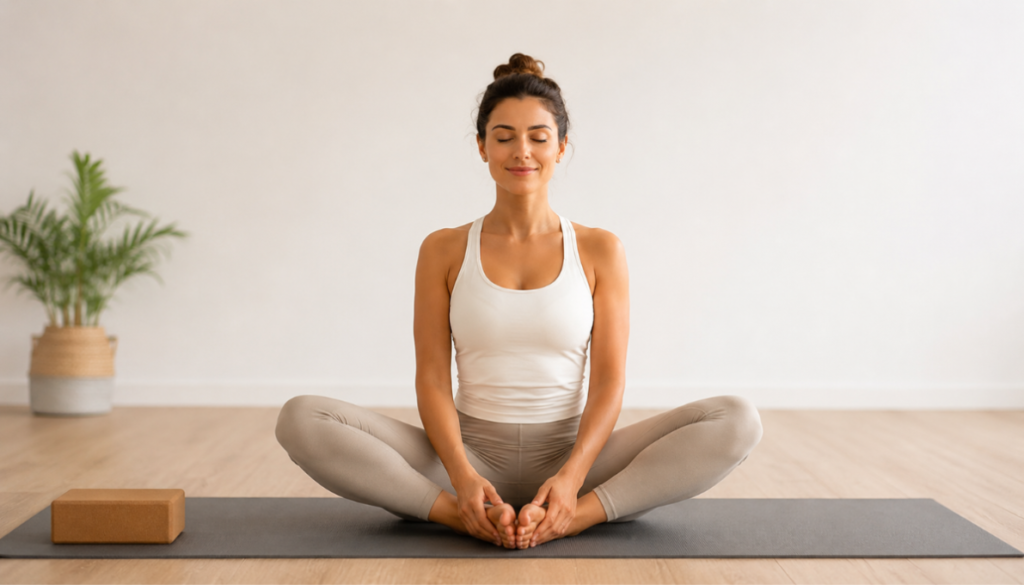
Butterfly Pose (Baddha Konasana)
Sitting with the soles of the feet together, this pose opens the inner thighs and hips. It is one of the safest hip-openers for beginners because the range of motion is easy to control by adjusting how close the feet sit to the body.
Best Yoga Poses for Advanced Practitioners
Once basic mobility is established, advanced poses challenge deeper ranges of motion and require more strength to support the stretch safely.
Pigeon Pose (Eka Pada Rajakapotasana)
A deep hip-opener that targets the outer hip and glute of the front leg while stretching the hip flexor of the back leg. Because it isolates one hip intensely, it should be approached gradually, often after warming up with lunges.
Hanumanasana (Monkey Pose / Front Splits)
This full front-split pose demands significant hamstring and hip flexor flexibility. It typically takes months of consistent practice to approach safely, and using blocks under the hands for support is common even among experienced practitioners.
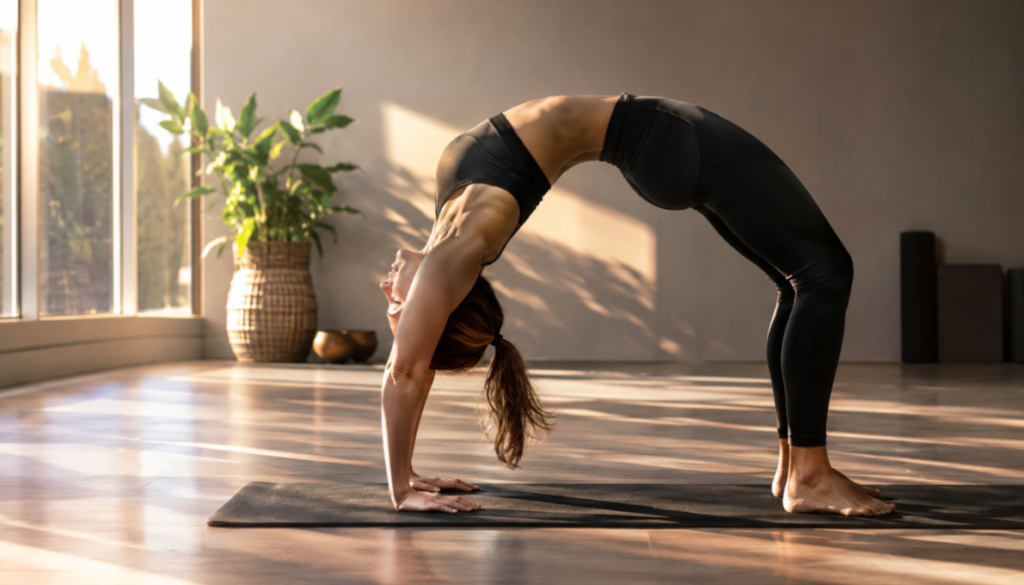
Wheel Pose (Urdhva Dhanurasana)
A backbend that opens the shoulders, chest, and hip flexors while requiring strength in the arms and legs to lift into the shape. It combines flexibility and strength, making it a good marker of overall mobility progress.
King Pigeon Pose (Eka Pada Rajakapotasana II)
An advanced variation that adds a backbend and shoulder opener to the hip stretch, requiring both flexibility and stability. This pose is generally reserved for practitioners with an established backbend and hip-opening practice.
Compass Pose (Parivrtta Surya Yantrasana)
This pose combines hamstring flexibility with shoulder mobility and balance, requiring the leg to extend fully overhead while seated. It represents one of the more demanding combinations of flexibility and coordination in a yoga practice.
The table below compares these poses side by side to help you place them within a progressive practice.
| Pose | Level | Primary Area Targeted | Key Benefit |
|---|---|---|---|
| Cat-Cow | Beginner | Spine | Improves spinal mobility and body awareness |
| Downward Dog | Beginner | Hamstrings, calves, shoulders | Full-body warm-up stretch |
| Low Lunge | Beginner | Hip flexors | Counters tightness from sitting |
| Seated Forward Fold | Beginner | Hamstrings, lower back | Builds posterior chain flexibility |
| Butterfly Pose | Beginner | Inner thighs, hips | Safe, adjustable hip opener |
| Pigeon Pose | Advanced | Outer hips, glutes | Deep single-hip release |
| Hanumanasana | Advanced | Hamstrings, hip flexors | Full front-split range of motion |
| Wheel Pose | Advanced | Shoulders, chest, hip flexors | Combines flexibility and strength |
| King Pigeon | Advanced | Hips, shoulders, spine | Advanced backbend and hip opener |
| Compass Pose | Advanced | Hamstrings, shoulders | Flexibility with balance and coordination |
Sample Yoga Routine for Flexibility
A short, structured routine performed consistently beats a long, sporadic one. This sequence takes roughly 15–20 minutes and moves from warm-up to deeper holds.
- Start with five rounds of Cat-Cow to mobilize the spine.
- Move into three rounds of Downward Dog, pedaling the feet to loosen the calves.
- Hold Low Lunge on each side for 5–8 breaths to open the hip flexors.
- Transition into Butterfly Pose, holding for one minute to release the inner thighs.
- Finish with Seated Forward Fold, holding for 1–2 minutes as the final release.
Tip: Hold each stretch for at least 30–60 seconds. Muscles typically need this amount of time under tension before the nervous system allows a deeper release, according to guidance from the Cleveland Clinic.
How Often You Should Practice for Real Results
Flexibility gains follow the same principle as strength training: frequency and consistency drive adaptation more than occasional intensity. Practicing three to five times per week, even for short sessions, tends to produce noticeably more progress over eight to twelve weeks than a single long session weekly.
Morning practice can feel stiffer since muscles are cold, while evening practice often allows for deeper stretches because the body has already warmed up throughout the day. Neither time is inherently better — the right time is the one that fits reliably into a routine, since adherence matters more than timing.
Read also: “Meal Prep for Weight Loss: Simple Recipes and Strategies“
Common Mistakes That Limit Flexibility Gains
Several habits quietly slow down flexibility progress, even in people who practice regularly.
- Bouncing into stretches. Rapid, bouncing movements (ballistic stretching) can trigger the stretch reflex, causing muscles to tighten rather than release.
- Skipping the warm-up. Cold muscles are more resistant to lengthening and more prone to strain, so jumping straight into deep poses increases injury risk.
- Holding the breath. Breath control is central to yoga; holding the breath during a stretch tends to increase muscular tension instead of releasing it.
- Comparing depth to others. Flexibility varies significantly between individuals due to joint structure, not just muscle tightness, so chasing someone else’s range of motion can lead to overstretching.
Tips to Deepen Your Practice Safely
Progress in flexibility is rarely linear, and pushing too hard often backfires by causing micro-injuries that set practice back by weeks. Using props like blocks, straps, and bolsters allows beginners to access proper alignment without forcing a stretch beyond a safe range. Straps are particularly useful in poses like Seated Forward Fold, where reaching the feet directly would otherwise require rounding the spine.
Pairing yoga with adequate hydration and sleep also supports tissue elasticity, since dehydrated or fatigued muscles tend to feel stiffer regardless of stretching effort. Tracking flexibility milestones, such as how far the hands reach in a forward fold, provides a more objective sense of progress than relying on how a stretch feels on a given day, which can vary with stress and sleep quality.
Yoga for flexibility works because it combines controlled stretching, breath awareness, and consistent practice rather than relying on force or intensity. Beginners build a strong foundation with poses like Cat-Cow, Downward Dog, and Butterfly Pose, while advanced practitioners deepen mobility through demanding shapes like Pigeon Pose, Hanumanasana, and Wheel Pose. The real driver of progress is not how deep a single stretch goes, but how often the practice happens over weeks and months. Start with a short, consistent routine, respect the body’s current range of motion, and let flexibility build gradually and safely.
Important disclaimers
The information in this article is for educational purposes only and does not replace guidance from a qualified healthcare or fitness professional. Always consult a doctor or physical therapist before starting a new exercise routine, especially if you have joint issues, chronic pain, or a pre-existing medical condition.
Frequently Asked Questions
How long does it take to see flexibility improvements from yoga?
Most people notice a modest increase in range of motion within two to four weeks of consistent practice, with more significant changes typically appearing after eight to twelve weeks.
Can yoga make you flexible even if you’re naturally stiff?
Yes. Flexibility is a trainable quality, not a fixed trait, and consistent practice improves range of motion regardless of starting point, though the rate of progress varies between individuals.
Is it normal to feel pain during a yoga stretch?
A mild pulling sensation is normal, but sharp or shooting pain is not and signals that the stretch should be eased immediately to avoid injury.
How many times a week should I practice yoga for flexibility?
Practicing three to five times per week produces more consistent results than a single long session weekly, since flexibility depends on frequent, repeated stretching stimulus.
Do I need to be flexible to start yoga?
No. Yoga is designed to build flexibility over time, and beginner poses are adaptable with props like blocks and straps for people with very limited initial mobility.
What’s the difference between static and dynamic stretching in yoga?
Static stretching holds a muscle at its end range without movement, as in Forward Fold, while dynamic stretching moves the body through a range of motion repeatedly, as in Sun Salutations, typically used to warm up before deeper holds.
Can yoga help with lower back pain related to tight hips?
Yoga poses that target the hip flexors and hamstrings, such as Low Lunge and Pigeon Pose, can reduce compensatory strain on the lower back, though persistent pain should be evaluated by a healthcare professional.

My relationship with health and wellness began on a personal level, looking for practical ways to improve my own routine: more movement, more mindful eating, and basic oral care habits that, over time, made a real difference in my quality of life. It was this ongoing process of learning — testing, researching, and adjusting — that motivated me to share what I learn with others on the same journey.