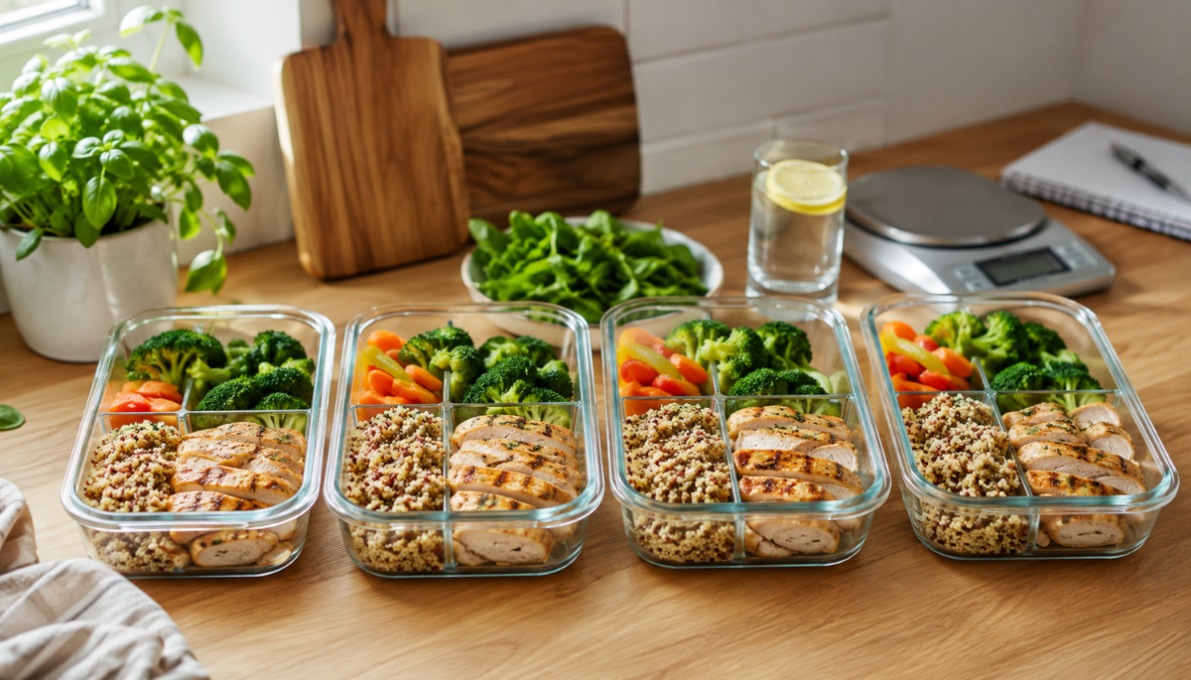
A balanced diet guide shows you how to eat a variety of vegetables, fruits, whole grains, protein foods, and healthy fats in sensible proportions. The WHO recommends at least 400 grams of fruits and vegetables daily, with limited sugar, salt, and saturated fat. Below is a practical way to put that into daily meals.
Most people already know vegetables are good for them. The trouble starts at 7 p.m. on a busy Tuesday, when the fridge is half empty and delivery is one tap away.
That gap between knowing and doing is the real problem. Take fiber. The Dietary Guidelines for Americans list dietary fiber among the nutrients many people consume too little of, even though beans, oats, vegetables, and whole grains are cheap and easy to find. Awareness is not the bottleneck. Systems are.
Advice like “eat balanced” sounds sensible and tells you almost nothing. What counts as balanced? How much is enough? Do you have to weigh food or count every calorie?
You don’t. This guide gives you a clear definition, a simple plate model, a five-step method for building meals, a three-day audit that reveals what your diet is missing, and corrections for the myths that trip people up most. No banned foods, no special products, no perfection required.
What a Balanced Diet Actually Means
A balanced diet is an eating pattern that supplies the nutrients your body needs, in appropriate proportions, from a variety of foods. It covers carbohydrates, protein, fats, vitamins, minerals, fiber, and water, without excess of any single component.
Notice what the definition leaves out. It names no calorie target, no forbidden food, and no clock. Balance describes the pattern across days and weeks, not the score of one meal.
Why Variety Beats Any Single “Superfood”
No food contains everything. Oats provide fiber but little vitamin C. Oranges provide vitamin C but almost no protein. Salmon delivers omega-3 fats but no fiber.
Variety fills those gaps. It also dilutes anything you would rather not overdo, which is why nutrition researchers generally favor diverse eating patterns over rigid ones.
The Numbers Worth Knowing
The WHO’s healthy diet guidance sets several concrete benchmarks for adults:
- At least 400 g of fruits and vegetables per day, roughly five portions of 80 g (potatoes and other starchy roots do not count)
- Free sugars below 10% of total energy intake, with added benefit below 5%
- Less than 5 g of salt per day, about one teaspoon
- Total fat below 30% of energy, saturated fat below 10%, and trans fats below 1%
You do not need to calculate these daily. They explain why a plate built around plants and minimally processed foods tends to land in a healthy range on its own.
Balanced Diet Guide to the Five Food Groups
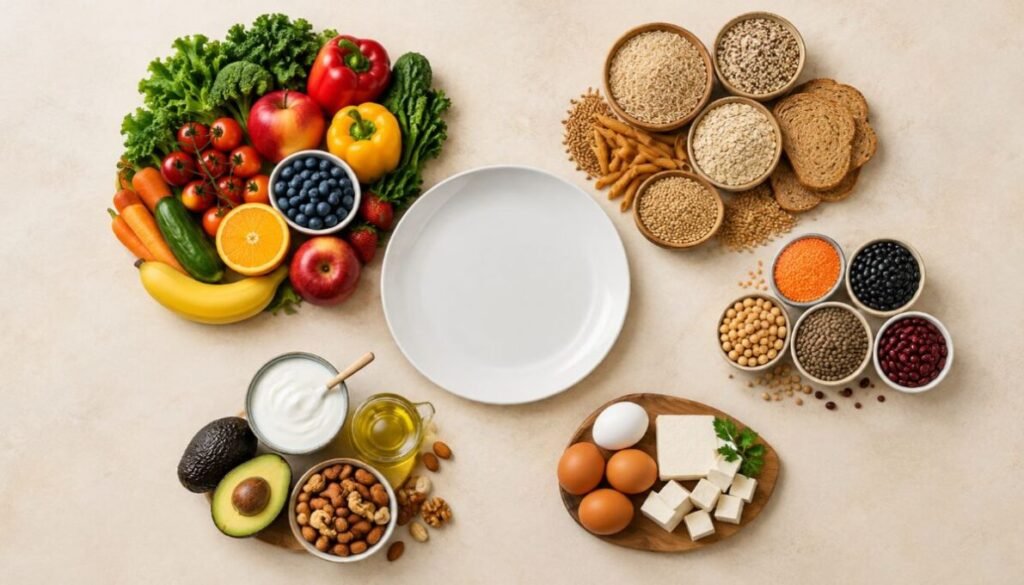
Each group does a different job. Dropping one without replacing what it provides is how nutritional gaps begin.
| Food group | Examples | Typical share of a plate | Main contribution |
|---|---|---|---|
| Vegetables and fruits | Leafy greens, peppers, tomatoes, berries, apples | About half | Fiber, potassium, vitamin C, antioxidants |
| Whole grains | Oats, brown rice, quinoa, whole-wheat bread | About a quarter | Fiber, B vitamins, steady energy |
| Protein foods | Beans, lentils, fish, eggs, poultry, tofu | About a quarter | Muscle repair, fullness, iron, zinc |
| Dairy or fortified alternatives | Yogurt, milk, kefir, fortified soy drink | 1 to 3 servings a day, depending on age | Calcium, vitamin D, protein |
| Healthy fats | Olive oil, avocado, nuts, seeds, fatty fish | Small amounts in cooking and dressings | Unsaturated fats, vitamin E |
Vegetables and Fruits: The Foundation
Color works as a rough guide to variety. Orange foods tend to carry beta-carotene, leafy greens carry folate and vitamin K, and berries carry anthocyanins.
Frozen and canned options count. Frozen vegetables are usually processed soon after harvest, which makes them a reliable, low-cost way to reach your daily target. Check that canned versions have no heavy added salt or sugar.
Whole Grains and Fiber
Whole grains keep the bran and germ, where most of the fiber and micronutrients live. Refined grains lose much of that in processing.
Fiber slows digestion, supports gut health, and helps you feel full. Nutrition labels in the US use 28 grams as the Daily Value on a 2,000-calorie diet, a useful reference point even if you live elsewhere.
Protein: Quality, Variety, and Timing
The standard adult recommended intake is 0.8 grams per kilogram of body weight per day. For a 70 kg adult, that is about 56 grams. Needs rise with age, pregnancy, and heavy training.
Spreading protein across meals tends to work better for fullness than loading it all at dinner. Rotate sources, because legumes, fish, eggs, poultry, and tofu each bring different supporting nutrients.
Healthy Fats: Small but Essential
Your body needs fat to absorb vitamins A, D, E, and K and to build cell membranes. The practical rule is to favor unsaturated sources such as olive oil, nuts, seeds, and fatty fish, and to keep saturated and trans fats low.
Quick tip: A thumb-sized portion of oil, nuts, or avocado per meal is usually enough. Fats are calorie-dense, so small amounts go a long way.
Read also: “Cardio Exercises Guide: Types, Benefits and Weekly Plans“
How to Build a Balanced Diet Plate in Five Steps
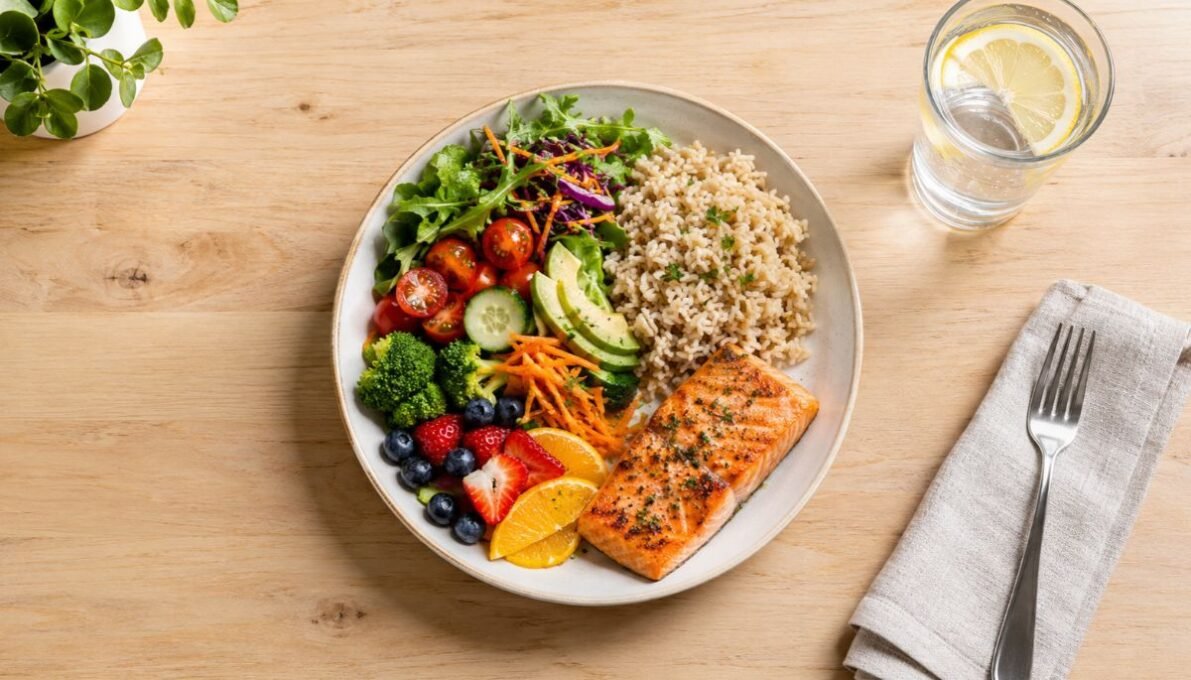
The simplest portion tool is visual. The Harvard Healthy Eating Plate divides a plate into vegetables and fruits, whole grains, and healthy protein, with healthy oils and water alongside.
What is the plate method? The plate method is a portion guide that fills half your plate with vegetables and fruit, one quarter with whole grains, and one quarter with protein. It balances a meal visually without calorie counting or weighing food.
Here is how to turn it into a routine:
- Start with vegetables and fruit. Fill half the plate before anything else, using at least two colors.
- Add whole grains to one quarter. Swap white rice for brown rice or white bread for whole-wheat, one meal at a time.
- Give protein the other quarter. Rotate beans, fish, eggs, poultry, and tofu across the week.
- Add a modest portion of healthy fat. Cook with olive oil, scatter seeds on a salad, or slice avocado on the side.
- Choose water as the default drink. Treat sugary drinks, juices, and sweetened coffee as occasional extras.
Try this for one meal a day for a week. Because the plate makes the decision for you, most people find it takes less effort than they expected.
The Three-Day Gap Audit: Find What Your Diet Is Missing
Most advice tells you what a balanced diet looks like. Few guides help you see where yours differs. A short audit does that, and it works better than guessing.
For three days, two weekdays and one weekend day, write down what you eat and drink. Skip calories and portion sizes, and note only what was on the plate. Then compare your notes to the patterns below.
| What you notice | What it often points to | Easiest first fix |
|---|---|---|
| Fruit or vegetables at fewer than three meals or snacks | Likely below the 400 g benchmark | Add one serving to breakfast |
| No beans, lentils, oats, or whole grains | Low fiber intake | Swap one refined grain for a whole one |
| Protein mostly at dinner | Uneven distribution across the day | Add eggs, yogurt, or tofu at breakfast |
| Sweet drinks or desserts every day | Free sugars may exceed 10% of energy | Replace one sweet drink with water or unsweetened tea |
| The same four meals on repeat | Narrow variety | Add one new vegetable or protein per week |
These signals are rough heuristics, not diagnoses. They show where to look, not what is wrong with your health.
An Illustrative Example
Picture a hypothetical office worker whose log shows a pastry and coffee for breakfast, a sandwich and chips for lunch, and pasta with sauce for dinner. Every meal is easy, and almost none contains vegetables, legumes, or much fiber.
She does not need a new diet. She needs three small upgrades: oatmeal with berries instead of the pastry, a side salad or fruit with lunch, and a handful of lentils or beans stirred into the pasta sauce. Each change takes under five minutes and fits her existing routine.
The One-Upgrade Rule
This is an opinion, not a research finding, but it holds up in practice. Fix one gap at a time, and wait until it feels automatic before starting the next. Trying to overhaul everything at once is the most common reason people quit within two weeks.
Balanced Diet Myths That Hold People Back
Bad nutrition advice spreads fast, and some of it sounds convincing. These are the myths that come up most.
Myth: Carbohydrates Make You Gain Weight
The type and total amount of carbohydrate matter more than the category itself. Whole grains, fruit, beans, and vegetables deliver carbs packaged with fiber, which slows digestion and increases fullness.
Refined carbohydrates and sugary drinks digest quickly and are easy to overeat. The fix is swapping refined for whole, not removing carbs entirely.
Myth: Low-Fat Always Means Healthier
Many fat-free products replace fat with added sugar or starch to keep the flavor. The label looks better while the nutritional profile may not. Read the ingredient list and the added sugar line, not just the front-of-package claim.
Myth: Supplements Can Replace Real Food
Supplements can fill specific, documented gaps. They cannot replicate the full mix of fiber, nutrients, and plant compounds in whole foods, and researchers are still studying many of those compounds.
Myth: One Bad Meal Ruins the Whole Diet
This myth does the most damage because it turns one slice of cake into a week of giving up. A balanced diet is judged across weeks, not meals. Returning to your usual pattern at the next meal is the entire strategy.
Read also: “Healthy Cooking Methods: 7 Techniques That Actually Work“
A Sample Day on a Balanced Diet
Theory is easier with a concrete example. This is one flexible day, not a prescription. Swap in foods you like and can find locally.
| Meal | Example | What it covers |
|---|---|---|
| Breakfast | Oatmeal with berries, walnuts, and plain yogurt | Whole grain, fruit, dairy, healthy fat |
| Lunch | Lentil and vegetable soup, whole-grain bread, side salad | Legumes, vegetables, whole grain |
| Snack | An apple with a small handful of almonds | Fruit, healthy fat, fiber |
| Dinner | Baked salmon, roasted broccoli and carrots, brown rice | Protein, vegetables, whole grain, omega-3 |
| All day | Water, unsweetened tea | Hydration without added sugar |
This day reaches about five portions of fruits and vegetables and includes several fiber sources and two protein sources, all from ordinary supermarket foods.

Adapting a Balanced Diet to Real Life
A balanced diet looks different depending on who is eating it. A few common situations deserve a closer look.
Vegetarian and Vegan Eating
Plant-based diets can be fully balanced, but a few nutrients need attention: vitamin B12, iron, zinc, iodine, calcium, and omega-3 fats. The Mayo Clinic’s vegetarian nutrition guidance highlights these same nutrients. Vitamin B12 in particular comes reliably only from animal foods and fortified products, so vegans typically rely on fortified foods or supplements.
Older Adults
Appetite often falls with age, while protein, vitamin D, calcium, and B12 needs stay high or rise. Smaller, nutrient-dense meals usually matter more than large portions.
Active People
Training raises the need for energy, carbohydrates, and protein. The base pattern stays the same, but portions scale up and timing around workouts starts to matter.
Eating Well on a Budget
Balance does not require expensive ingredients. Dried beans, lentils, oats, eggs, frozen vegetables, canned fish, and seasonal produce cover most food groups at low cost.
Medical conditions such as diabetes, kidney disease, or food allergies change the specific targets. A general guide like this one is a starting point, not a personalized plan.
Conclusion
A balanced diet is not a strict program. It is a pattern: half the plate from vegetables and fruit, a quarter from whole grains, a quarter from protein, a little healthy fat, and mostly water to drink.
The WHO benchmarks give you the guardrails, the plate method gives you a way to follow them without counting anything, and the three-day audit shows you where to begin. Fix one gap, make it automatic, then move to the next.
If this balanced diet guide was useful, leave a comment with your biggest meal-planning challenge and explore the other Lifestyle guides on the blog.
Important Notice
The information in this article is for informational and educational purposes only and does not replace the assessment or guidance of a healthcare professional. Always consult a physician before making any decision about your treatment or diagnosis.

My relationship with health and wellness began on a personal level, looking for practical ways to improve my own routine: more movement, more mindful eating, and basic oral care habits that, over time, made a real difference in my quality of life. It was this ongoing process of learning — testing, researching, and adjusting — that motivated me to share what I learn with others on the same journey.