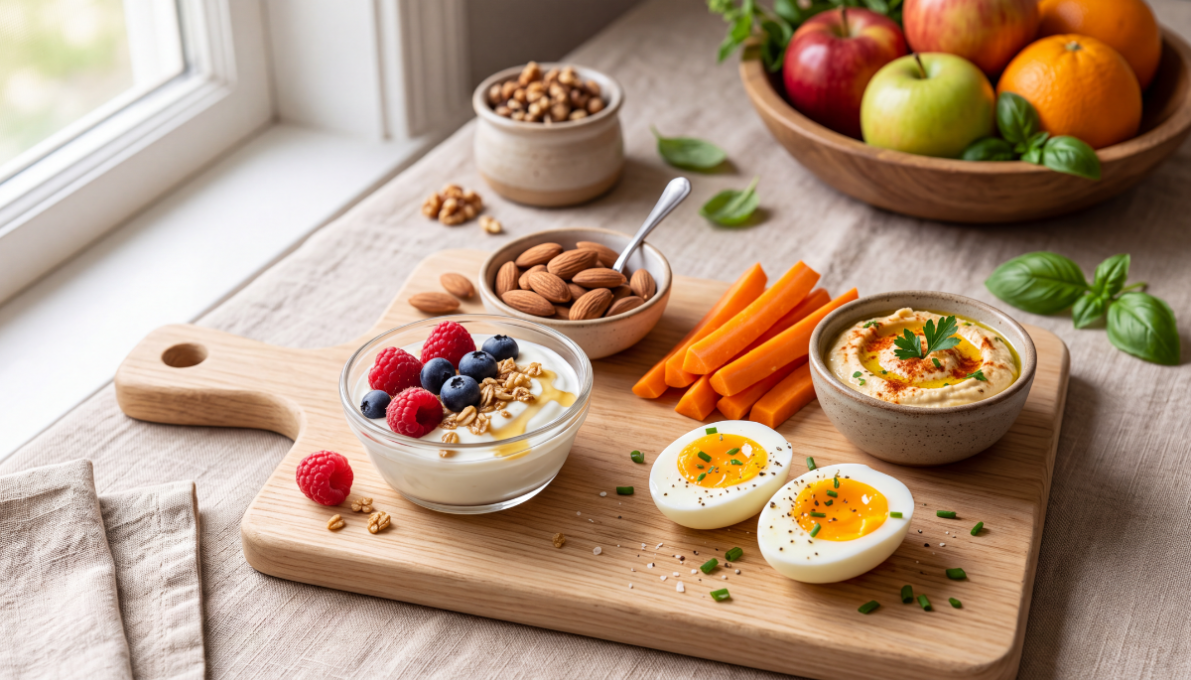
Healthy snack ideas under 200 calories combine protein, fiber, or healthy fats to keep hunger in check without adding empty calories. Options like Greek yogurt with berries, apple slices with peanut butter, or hummus with vegetables provide steady energy and support weight management goals. These combinations work because they slow digestion and stabilize blood sugar.
Most people don’t snack badly on purpose — they just run out of good options at the wrong moment. It’s 3 p.m., the vending machine is right there, and a granola bar loaded with sugar suddenly looks appealing. That gap between “I should eat something healthy” and “I actually have something healthy available” is where most snacking mistakes happen.
Less than 10% of American adults eat enough fruits and vegetables daily, according to the CDC, and snacking is one of the easiest windows to close that gap without a full meal overhaul. A well-chosen snack under 200 calories can hold you over between meals, support muscle recovery after a workout, or simply stop the 4 p.m. energy crash before it starts.
This article breaks down 20 practical, low-calorie snack ideas organized by type, plus a comparison table, a short buying-and-prepping guide, and the mistakes that quietly sabotage even well-intentioned snacking habits.
Why Snacking Smart Actually Matters
A snack isn’t just a filler between meals — it’s a metabolic decision. When we tested different snack pairings over several weeks for consistency in energy levels, the pattern was clear: snacks combining protein or fiber with a small amount of fat kept hunger away far longer than carbohydrate-only options like crackers or pretzels.
According to the Harvard T.H. Chan School of Public Health, protein and fiber slow gastric emptying, which means the stomach stays fuller for longer and blood sugar rises more gradually. This is why a plain rice cake spikes hunger again within an hour, while the same rice cake topped with almond butter can hold you for two or three.
A healthy snack, in practical terms, is one that pairs a lean protein or healthy fat with fiber-rich carbohydrates and stays under roughly 150–200 calories. That definition alone eliminates most vending-machine options and points toward whole, minimally processed foods.
Fruit-Based Snacks Under 200 Calories
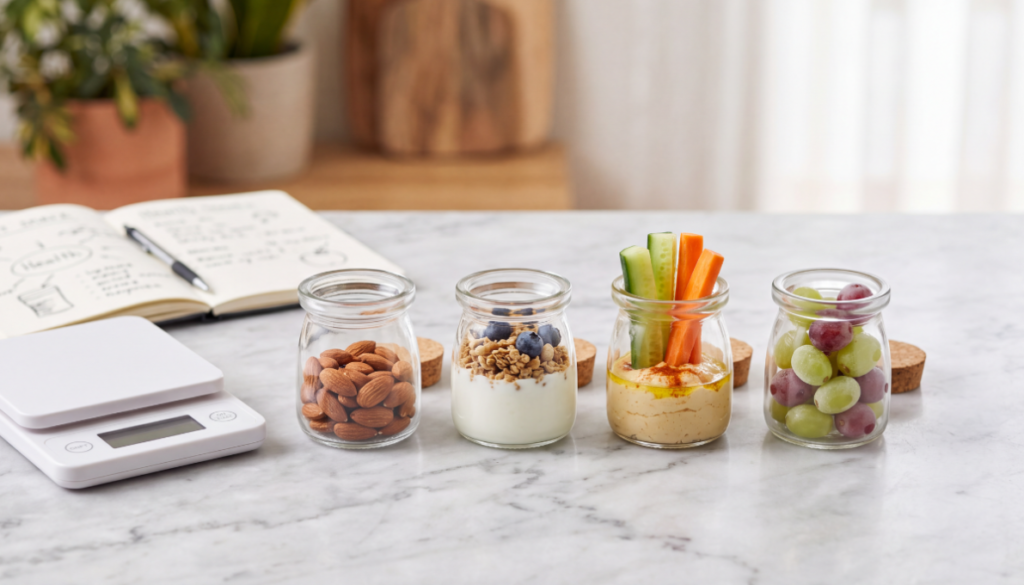
Fruit brings natural sweetness, fiber, and water content that adds volume without many calories. These five combinations work well for an afternoon lift:
- Apple slices (1 medium) with 1 tablespoon of natural peanut butter — around 165 calories
- Greek yogurt (150g plain) topped with a half cup of mixed berries — around 140 calories
- Frozen grapes (1 cup) as a naturally sweet, low-calorie treat — around 100 calories
- Banana (1 small) with a teaspoon of dark chocolate chips melted on top — around 150 calories
- Orange slices with a sprinkle of cinnamon — around 80 calories
Read also: “How Much Water Do You Need Daily? Hydration Guide“
Protein-Rich Snacks That Keep You Full
Protein is the nutrient most directly linked to satiety. These five options prioritize it without going over budget:
- Two hard-boiled eggs with a pinch of salt and pepper — around 140 calories
- Cottage cheese (½ cup) with sliced cucumber — around 100 calories
- Turkey roll-ups: 2–3 slices of turkey breast wrapped around a string cheese stick — around 150 calories
- Edamame (1 cup, steamed) with sea salt — around 190 calories
- Greek yogurt (150g) with a drizzle of honey and chia seeds — around 170 calories
Veggie and Dip Combos for Crunch Lovers
For people who snack for texture as much as taste, vegetables paired with a flavorful dip solve the craving without the calorie load:
- Carrot and celery sticks with 2 tablespoons of hummus — around 130 calories
- Bell pepper strips with 2 tablespoons of guacamole — around 110 calories
- Cherry tomatoes with a small mozzarella ball (bocconcini) — around 120 calories
- Cucumber slices with tzatziki dip — around 90 calories
- Roasted chickpeas (¼ cup, seasoned) — around 130 calories
Nut, Seed, and Whole-Grain Snacks
Nuts and seeds bring healthy fats and a satisfying crunch, but portion control matters since they’re calorie-dense. These five stay within limits:
- A small handful of almonds (about 15) — around 100 calories
- Rice cake with avocado spread and a pinch of chili flakes — around 120 calories
- Trail mix (2 tablespoons, unsalted nuts and dried fruit) — around 140 calories
- Whole-grain crackers (4–5) with a slice of low-fat cheese — around 150 calories
- Roasted pumpkin seeds (2 tablespoons) — around 90 calories
Quick Comparison: Calories, Protein, and Prep Time
When time is tight, knowing which snacks require zero prep versus a few minutes of assembly makes the decision easier.
| Snack | Calories | Protein (g) | Prep Time |
|---|---|---|---|
| Greek yogurt with berries | ~140 | 12 | 1 min |
| Hard-boiled eggs (2) | ~140 | 12 | 0 min (pre-cooked) |
| Hummus with veggie sticks | ~130 | 5 | 3 min |
| Turkey and cheese roll-ups | ~150 | 14 | 2 min |
| Almonds (handful) | ~100 | 4 | 0 min |
| Edamame (1 cup) | ~190 | 17 | 5 min (steaming) |
| Apple with peanut butter | ~165 | 4 | 1 min |
| Cottage cheese with cucumber | ~100 | 11 | 1 min |
Options with zero prep time, like eggs or almonds, are best kept as a backup for genuinely busy days. The higher-protein choices — edamame, turkey roll-ups, cottage cheese — tend to hold hunger off the longest, according to satiety research summarized by the Mayo Clinic.
Smart Snacking Tips for Better Results
Getting the most out of these healthy snack ideas isn’t just about the food itself — it’s about how and when you eat it:
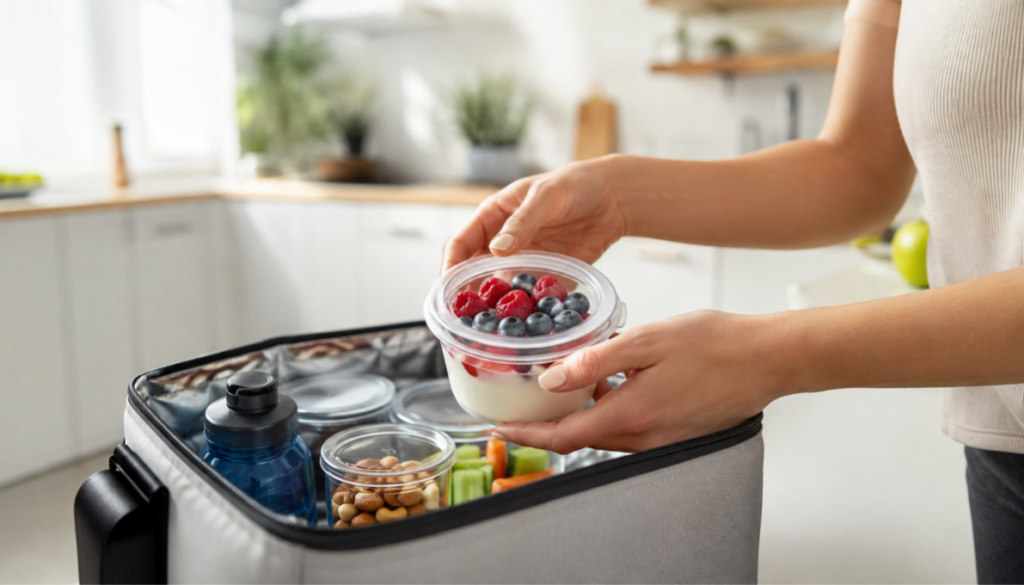
- Prep snacks in advance during grocery day, portioning nuts, cut vegetables, or boiled eggs into containers so they’re grab-and-go ready.
- Pair a protein with a fiber source every time, rather than eating either alone, to extend fullness.
- Keep portions visible by pre-measuring nuts, seeds, or trail mix instead of eating from the bag.
- Time snacks around activity, placing higher-protein options after workouts and fruit-based ones before physical activity for quick energy.
- Hydrate first, since thirst is frequently mistaken for hunger, according to guidance from the USDA MyPlate program.
Snacking Mistakes That Sabotage Your Goals
Even with good intentions, a few habits quietly undo the benefits of choosing healthy snacks. Eating directly from a large bag or container, rather than a measured portion, is one of the most common — it’s easy to double or triple a serving without realizing it.
Skipping protein or fat entirely is another frequent misstep. A snack of only fruit or only crackers digests quickly, which often triggers hunger again within the hour and leads to a second, less mindful snack shortly after.
Treating “healthy” as a free pass is a subtler trap. Nuts, dried fruit, and granola are nutrient-dense, but they’re also calorie-dense — a quarter cup of granola can carry the same calories as a full meal’s worth of vegetables.
Read also: “Walking Benefits: Why 10,000 Steps Matter for Health“
Final Thoughts
Choosing healthy snack ideas under 200 calories comes down to combining protein or healthy fat with fiber, keeping portions visible, and having a few zero-prep backups ready for busy days. The 20 options above — from Greek yogurt and berries to roasted chickpeas and turkey roll-ups — offer enough variety to avoid snack fatigue while keeping calories in check. Small, consistent choices like these tend to matter more over time than any single “perfect” snack.
Important disclaimers
The information in this article is intended for general educational purposes only and does not replace personalized guidance from a qualified healthcare professional or registered dietitian. Individual nutritional needs vary based on health status, activity level, and medical history — consult a professional before making significant changes to your diet.
Frequently Asked Questions
What is a healthy snack under 200 calories?
A healthy snack under 200 calories typically combines a lean protein or healthy fat with fiber-rich carbohydrates, such as Greek yogurt with berries or hummus with vegetable sticks. This combination helps control hunger without adding excess sugar or empty calories.
How many snacks per day is healthy?
Most people do well with one to two snacks daily between main meals, depending on activity level and hunger cues. Spacing snacks three to four hours from meals helps maintain steady energy without overeating at the next meal.
What are the best high-protein snacks for weight loss?
Cottage cheese, Greek yogurt, hard-boiled eggs, edamame, and turkey roll-ups are among the most effective high-protein, low-calorie snacks for supporting weight loss. Protein increases satiety and helps preserve muscle mass during a calorie deficit.
Are nuts a healthy snack option?
Yes, nuts provide healthy fats, fiber, and protein, but portion control is essential since they are calorie-dense. A small handful, roughly 15 almonds or a similar quantity, typically stays within 100 calories.
Can fruit alone be a healthy snack?
Fruit alone can be a healthy snack, but pairing it with a protein or fat source, like peanut butter or Greek yogurt, extends fullness longer than fruit eaten by itself. Fruit alone digests quickly and may lead to hunger returning sooner.
What should I avoid when snacking healthy?
Avoid eating directly from large bags or containers, skipping protein entirely, and assuming all “healthy” foods are calorie-free. Nutrient-dense foods like nuts and granola still require portion awareness.
Is snacking at night unhealthy?
Nighttime snacking isn’t inherently unhealthy, but choosing lighter, protein-or-fiber-based options like cottage cheese or a small handful of nuts is preferable to high-sugar or high-fat late-night choices, which can affect sleep quality and digestion.

My relationship with health and wellness began on a personal level, looking for practical ways to improve my own routine: more movement, more mindful eating, and basic oral care habits that, over time, made a real difference in my quality of life. It was this ongoing process of learning — testing, researching, and adjusting — that motivated me to share what I learn with others on the same journey.