
Sleep hygiene tips are the daily habits and environmental changes that help you fall asleep faster and stay asleep longer, including a consistent bedtime, a cool dark bedroom, and limited screen time before bed. Small, consistent adjustments to these routines often produce noticeable improvements in sleep quality within one to two weeks.
Why Millions of People Struggle to Fall Asleep
If you’ve spent the last hour staring at the ceiling wondering why sleep won’t come, you’re far from alone. Poor sleep hygiene is one of the most common — and most fixable — reasons adults struggle with rest.
The Centers for Disease Control and Prevention notes that a significant share of American adults regularly get less sleep than recommended for their age group, a pattern linked to higher risks of heart disease, weight gain, and impaired concentration (CDC).
The good news: sleep hygiene tips are not about expensive gadgets or complicated routines. They’re about small, repeatable habits that work with your body’s natural rhythm instead of against it. This guide walks through twelve practical changes you can start using tonight, organized so you can act on them immediately rather than just read about them.
What Is Sleep Hygiene and Why It Matters
Sleep hygiene refers to the set of behavioral and environmental practices that support consistent, high-quality sleep. It covers everything from what time you go to bed to how warm your room feels at 2 a.m.
Sleep hygiene is not a single action but a system of habits that reinforce your circadian rhythm — the internal 24-hour clock that regulates when your body wants to be awake or asleep. When that rhythm is disrupted by irregular bedtimes, bright light exposure, or stimulants, falling and staying asleep becomes noticeably harder.
According to the National Heart, Lung, and Blood Institute, consistency is the single strongest lever for improving sleep quality, often outperforming isolated changes like buying a new mattress (NHLBI).
Read also: “Sleep Quality: 7 Proven Strategies to Achieve Quality Sleep and Wake Up Fully Refreshed“
Build a Consistent Sleep Schedule
1. Go to Bed and Wake Up at the Same Time Every Day
Your circadian rhythm thrives on predictability. Going to bed and waking up within the same 30-minute window, even on weekends, trains your brain to release melatonin and cortisol at the right times.
In practice, the hardest part isn’t the weekday schedule — it’s resisting the urge to sleep in on Saturday. A two-hour weekend shift can undo several days of progress, an effect sleep researchers sometimes call “social jet lag.”
2. Get Morning Sunlight Exposure
Ten to fifteen minutes of natural light shortly after waking helps anchor your circadian rhythm and suppress residual melatonin, making it easier to feel alert during the day and sleepy at the appropriate time at night.
If you wake up before sunrise for work, a short walk outside or sitting near a bright window during breakfast can produce similar benefits.
3. Avoid Long or Late Naps
Naps aren’t inherently bad, but a nap longer than 30 minutes, or one taken after 3 p.m., can reduce your body’s sleep pressure — the biological drive to sleep that builds throughout the day — making it harder to fall asleep that night.

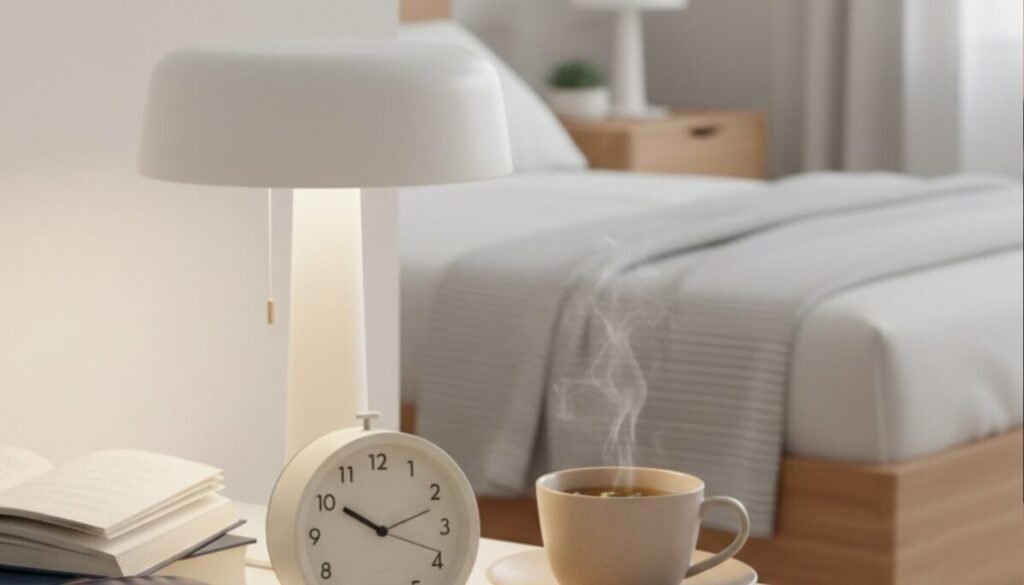
Optimize Your Sleep Environment
4. Keep the Bedroom Cool
Body temperature naturally drops as part of the sleep-onset process. A room that’s too warm interferes with this drop. Most sleep specialists, including those at the Mayo Clinic, recommend a bedroom temperature between 60 and 67°F (15.5 to 19.5°C) for optimal rest (Mayo Clinic).
5. Eliminate Light Sources
Even small amounts of light — a phone charging indicator, a streetlight through thin curtains — can suppress melatonin production. Blackout curtains, an eye mask, or simply turning devices face-down can meaningfully improve sleep depth.
6. Reduce Noise Disruption
Sudden or inconsistent noise fragments sleep even when it doesn’t fully wake you. A white noise machine, fan, or earplugs can mask unpredictable sounds like traffic or a partner’s movements without introducing a new disturbance.
The table below summarizes the ideal environmental settings for sleep, based on common recommendations from sleep health organizations.
| Environmental Factor | Recommended Setting | Why It Matters |
|---|---|---|
| Room temperature | 60–67°F (15.5–19.5°C) | Supports the natural body-temperature drop needed for sleep onset |
| Light exposure | As close to total darkness as possible | Prevents melatonin suppression |
| Noise level | Consistent, low, or masked with white noise | Reduces sleep fragmentation from sudden sounds |
| Mattress/pillow age | Replaced every 6–8 years (mattress) | Prevents pain-related awakenings |
Adjust Daytime Habits That Affect Sleep
7. Watch Your Caffeine Timing
Caffeine has a half-life of roughly five to six hours, meaning half the dose from a 3 p.m. coffee could still be active in your system at 9 p.m. Cutting off caffeine intake by early afternoon gives your body enough time to clear it before bedtime.
8. Exercise Regularly, But Not Right Before Bed
Regular physical activity is consistently associated with deeper, more restorative sleep. However, vigorous exercise within an hour or two of bedtime raises core body temperature and adrenaline, which can delay sleep onset for some people.
9. Limit Alcohol in the Evening
Alcohol may help you fall asleep faster, but it fragments sleep later in the night and reduces REM sleep — the stage associated with memory consolidation and emotional processing. The result is often a night that feels shorter and less restful, even if total hours were normal.
Manage Technology and Evening Routines
10. Reduce Blue Light Exposure Before Bed
Screens emit blue wavelengths of light that suppress melatonin more strongly than warmer light sources. The Sleep Foundation recommends limiting phone, tablet, and computer use for 30 to 60 minutes before bedtime, or using night-mode settings if screens are unavoidable (Sleep Foundation).
11. Create a Wind-Down Routine
A wind-down routine signals to your brain that sleep is approaching, similar to how a toddler’s bedtime story works. Reading a physical book, light stretching, or journaling for ten minutes can replace scrolling and lower physiological arousal before lights-out.
12. Reserve the Bed for Sleep
Using the bed for work, eating, or watching TV weakens the mental association between “bed” and “sleep.” Over time, this association is part of what makes it easy — or hard — to fall asleep quickly once you lie down.
Quick tip: If you’re not asleep within 20 minutes of lying down, get up and do something calm in dim light rather than lying awake frustrated. This prevents your brain from associating the bed with wakefulness and anxiety.
Read also: “Morning Routine for Productivity: 10 Habits to Transform Your Day“
Common Sleep Hygiene Mistakes to Avoid
Even well-intentioned routines can backfire if a few details are off. The comparison below highlights frequent mistakes alongside more effective alternatives.
| Common Mistake | Better Alternative |
|---|---|
| Checking the clock repeatedly when awake at night | Turn the clock face away to reduce anxiety about lost sleep |
| Using the “5 more minutes” snooze button | Set one alarm and get up immediately to protect the sleep schedule |
| Drinking coffee to “catch up” after a bad night | Get morning sunlight instead to reset the circadian rhythm |
| Scrolling social media in bed “just for a minute” | Charge the phone outside the bedroom overnight |
When to Seek Additional Help
Sleep hygiene tips resolve the majority of occasional sleep difficulties, but persistent insomnia, loud snoring with gasping, or excessive daytime sleepiness despite good habits can indicate an underlying sleep disorder such as sleep apnea or chronic insomnia disorder. These conditions typically require evaluation beyond lifestyle adjustments alone.
Final Thoughts on Better Sleep Tonight
Improving sleep hygiene isn’t about perfection — it’s about consistency. Picking two or three tips from this list, such as a fixed wake time, a cooler bedroom, and less evening screen time, tends to produce noticeable results faster than trying to overhaul every habit at once.
Better sleep compounds: improved rest supports mood, focus, and physical health, which in turn makes it easier to stick with the very habits that got you there. Start with tonight’s bedtime, and build from there.
Important Disclaimer
The information in this article is intended for general educational purposes only and does not substitute for professional medical evaluation or advice. If you experience persistent sleep difficulties, please consult a licensed healthcare provider before making decisions about diagnosis or treatment.
Frequently Asked Questions
What is the fastest way to fix bad sleep hygiene?
The fastest results usually come from fixing wake-up time first, since it’s easier to control than bedtime. Waking up at the same time every day, including weekends, helps recalibrate the circadian rhythm within a few days.
How long does it take to see results from improving sleep hygiene?
Most people notice improvements in sleep quality within one to two weeks of consistent changes. Full circadian adjustment, especially after correcting a very irregular schedule, can take up to three to four weeks.
What temperature is best for sleeping?
A bedroom temperature between 60 and 67°F (15.5 to 19.5°C) is generally recommended, since it supports the natural drop in core body temperature required to fall asleep and stay asleep.
Does napping ruin sleep hygiene?
Short naps under 30 minutes, taken before mid-afternoon, do not typically interfere with nighttime sleep. Long or late naps reduce sleep pressure and can make it harder to fall asleep at night.
Can poor sleep hygiene cause insomnia?
Yes, inconsistent habits such as irregular bedtimes, late caffeine intake, and heavy screen use before bed are common contributors to situational insomnia. Correcting these habits often resolves mild to moderate insomnia without further intervention.
Is melatonin part of sleep hygiene?
Melatonin supplements are a separate intervention from sleep hygiene practices, which focus on behavior and environment rather than supplementation. Anyone considering melatonin should discuss appropriate dosing and timing with a healthcare provider.
How much sleep do adults actually need?
Most adults need between seven and nine hours of sleep per night for optimal health and functioning, according to major sleep health organizations. Needs can vary slightly by individual, age, and health status.