

Intermittent fasting is an eating pattern that cycles between defined periods of eating and voluntary fasting, rather than specifying which foods to eat. The most common approach restricts eating to an 8-hour window each day. Research links it to improved insulin sensitivity and modest weight loss, though results vary by individual and method chosen.
Starting a new eating pattern can feel overwhelming, especially when the internet is flooded with conflicting advice about meal timing, calorie counting, and “the one right way” to fast. If you’ve ever wondered whether skipping breakfast could actually help you feel sharper, lose fat, or simplify your relationship with food, you’re not alone — intermittent fasting has become one of the most searched health topics in the United States over the past few years. According to the Harvard T.H. Chan School of Public Health, interest in fasting-based diets has grown steadily as more studies examine their metabolic effects. This guide walks through what intermittent fasting actually is, the methods that work best for different lifestyles, and how to start without setting yourself up to fail in the first week.
What Is Intermittent Fasting, Exactly?
Intermittent fasting (IF) isn’t a diet in the traditional sense — it doesn’t tell you what to eat, only when. The core idea is simple: you compress your eating into a shorter window and extend the time your body spends in a fasted state.
During a fast, insulin levels drop and the body gradually shifts from using glucose as its primary fuel to tapping into stored fat. This metabolic switch typically begins somewhere between 12 and 16 hours after your last meal, depending on your metabolism, activity level, and what you last ate. The switch is gradual, not instant — this is one of the most misunderstood parts of intermittent fasting for beginners.
Why the Body Responds This Way
Humans evolved without constant access to food, so the body has built-in mechanisms to handle periods without eating efficiently. Fasting triggers a process called autophagy, where cells clean out damaged components — a mechanism studied extensively by Nobel laureate Yoshinori Ohsumi and referenced in ongoing research on aging and metabolic health.
Read also: “Stress Management Techniques: 8 Methods Backed by Science“
Popular Intermittent Fasting Methods
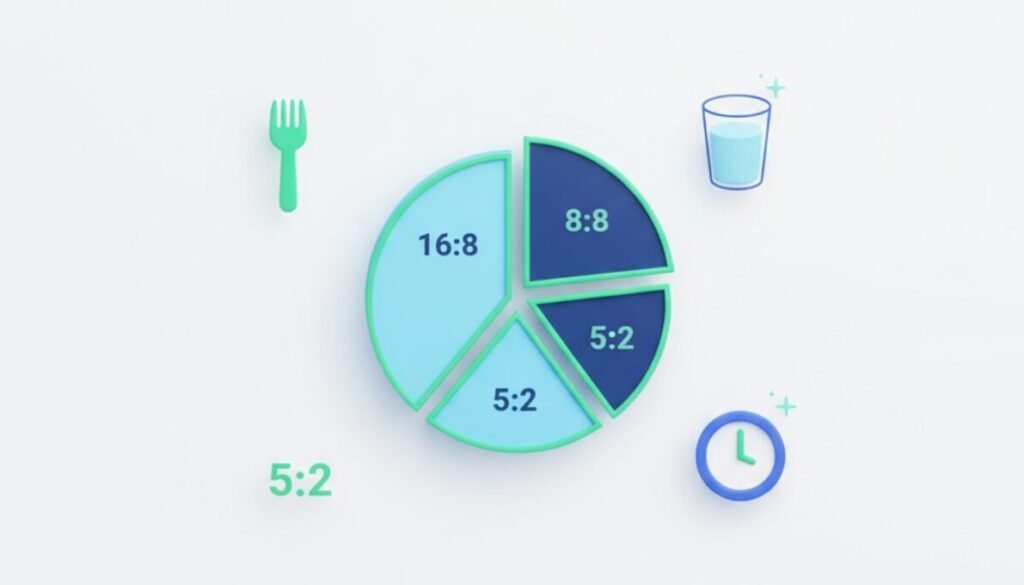
Not all fasting schedules are created equal, and the right one depends heavily on your daily routine, work schedule, and tolerance for hunger. Here’s how the most common methods compare:
| Method | Eating Window | Fasting Period | Best For |
|---|---|---|---|
| 16:8 | 8 hours | 16 hours | Beginners, daily routine |
| 5:2 | Normal 5 days | 2 non-consecutive low-calorie days (~500-600 cal) | Flexible schedules |
| Eat-Stop-Eat | Normal days | One or two 24-hour fasts weekly | Experienced fasters |
| Alternate-Day Fasting | Every other day | Fasting or very low calorie every other day | Aggressive fat loss goals |
| Warrior Diet | 4-hour window | 20 hours | Advanced practitioners |
The 16:8 method tends to be the easiest entry point because it usually just means skipping breakfast and having your first meal around noon, then finishing dinner by 8 PM. Most of the “fasting” hours happen while you sleep.
Quick definition: Intermittent fasting is an eating pattern — not a diet — that alternates between periods of eating and fasting, most commonly following a 16:8 schedule where all meals occur within an 8-hour daily window.
Benefits of Intermittent Fasting Backed by Research
Interest in intermittent fasting exploded largely because of research suggesting benefits beyond simple weight loss. According to Johns Hopkins Medicine, studies on fasting have shown improvements in blood pressure, cholesterol levels, and blood sugar regulation, alongside weight loss in many participants.
Some of the most consistently observed effects include:
- Improved insulin sensitivity, which may lower the risk of type 2 diabetes over time
- Reduced inflammation markers in several short-term clinical trials
- Modest but sustainable weight loss when combined with a reasonable calorie intake during eating windows
- Simplified meal planning, since fewer meals often means less decision fatigue around food
- Potential improvements in cellular repair processes linked to autophagy
It’s worth being precise here: intermittent fasting doesn’t create a metabolic magic trick. Weight loss still comes down to consuming fewer calories than you burn — fasting simply makes that easier for many people by naturally reducing the eating window and, often, overall food intake.

How to Start Intermittent Fasting: A Step-by-Step Approach
Jumping straight into a strict 16:8 schedule on day one is one of the fastest ways to quit by day three. A gradual ramp-up works far better for most beginners.
- Track your current eating window for three days without changing anything, just to see your baseline.
- Push breakfast back by 30-60 minutes each day until you’re comfortably eating your first meal around noon.
- Keep dinner consistent and avoid late-night snacking, since this extends your natural overnight fast.
- Stay hydrated during fasting hours with water, black coffee, or plain tea — all of which don’t break a fast.
- Eat balanced meals during your window, prioritizing protein and fiber to stay full longer.
- Monitor how you feel for the first two weeks, adjusting the window size if energy or mood dips significantly.
- Reassess after 3-4 weeks to decide whether 16:8 works or whether a different method fits your lifestyle better.
Consistency matters more than perfection in the first month. Missing a day or extending your eating window occasionally won’t undo progress — the goal is a sustainable pattern, not a rigid rule.
Common Mistakes Beginners Make
A lot of frustration with intermittent fasting comes from a handful of avoidable errors rather than the method itself failing:
- Overeating during the eating window to “compensate” for the fast, which cancels out the calorie deficit
- Skipping protein, leading to muscle loss alongside fat loss
- Starting with an aggressive schedule like 20:4 before building tolerance
- Ignoring hunger cues that signal something is actually wrong, like dizziness or extreme fatigue
- Fasting through intense workouts without adjusting nutrition timing around training
Read also: “Sleep Hygiene Tips: 12 Proven Ways to Sleep Better Tonight“
Who Should Approach Intermittent Fasting With Extra Caution
Intermittent fasting isn’t a universal fit. People with a history of disordered eating, those who are pregnant or breastfeeding, individuals managing diabetes with insulin, and people under significant physical stress or recovering from illness often need a different nutritional strategy altogether. The National Institute on Aging notes that while fasting research shows promise, most large-scale human studies remain short-term, and long-term effects across different populations are still being studied.
Intermittent Fasting and Exercise
Training while fasted is common, particularly with the 16:8 method, since many people naturally fast overnight and exercise before their first meal. Fasted cardio can work well for steady-state activities like walking or light jogging. Heavy resistance training, however, often benefits from at least some protein and carbohydrates beforehand to support performance and recovery — this is where timing your eating window around your workout schedule becomes genuinely useful rather than just theoretical.
Intermittent fasting offers a flexible, food-neutral approach to eating that can support weight management, metabolic health, and simpler daily routines when applied thoughtfully. The key is starting gradually, choosing a method that fits your actual lifestyle rather than the most extreme option you’ve seen online, and paying attention to how your body responds along the way. Whether you settle on 16:8, 5:2, or something in between, the best intermittent fasting schedule is the one you can maintain consistently. If this guide helped clarify how to get started, consider exploring related nutrition topics to round out your approach to sustainable health.
Important Disclaimer
The information in this article is intended for educational and informational purposes only and does not replace the assessment or guidance of a qualified healthcare professional. Always consult a doctor before making any decisions about your treatment or diagnosis.
Frequently Asked Questions
Is intermittent fasting safe for beginners?
For most healthy adults, intermittent fasting is generally considered safe when introduced gradually. People with diabetes, a history of eating disorders, or who are pregnant should approach it with extra caution due to specific health risks.
Can I drink coffee while fasting?
Yes, black coffee and plain tea are widely considered acceptable during fasting periods since they contain minimal to no calories and don’t significantly affect insulin levels. Adding sugar, cream, or milk breaks the fast.
How long does it take to see results from intermittent fasting?
Most people notice changes in energy and hunger patterns within one to two weeks, while measurable weight loss typically becomes visible after three to four weeks of consistent practice.
What can I eat during my eating window?
There are no restricted foods with intermittent fasting itself, though balanced meals with protein, fiber, and healthy fats tend to produce better results than highly processed foods.
Does intermittent fasting slow down metabolism?
Short-term fasting periods, such as 16:8, have not been shown to significantly slow metabolism in most studies. Metabolic slowdown is more commonly associated with prolonged, severe calorie restriction rather than time-restricted eating.
Can I exercise while fasting?
Yes, many people exercise in a fasted state, particularly for lower-intensity activities like walking. For intense strength training, some pre-workout nutrition may improve performance and recovery.
What’s the easiest intermittent fasting method for beginners?
The 16:8 method is widely considered the easiest starting point because it typically only requires skipping breakfast, making it easier to fit into an existing daily routine without major disruption.