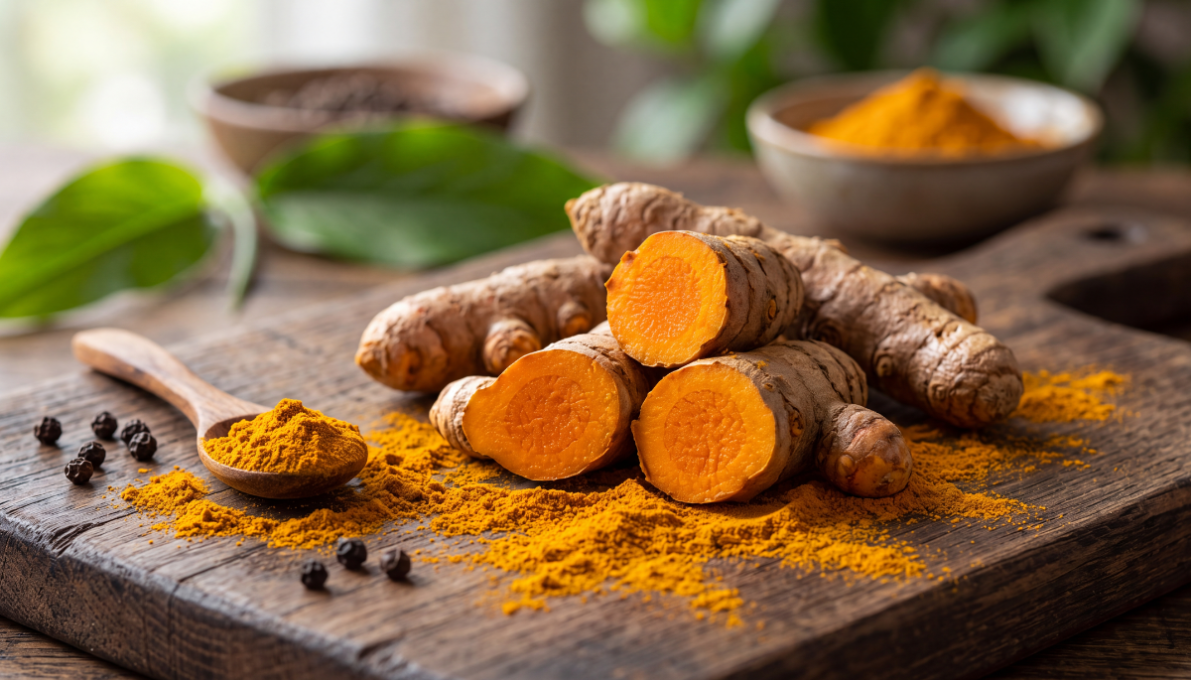
Turmeric health benefits come primarily from curcumin, the compound responsible for the spice’s bright yellow color and its anti-inflammatory and antioxidant properties. According to the Cleveland Clinic, turmeric can help fight inflammation and even improve memory. Regular use has been linked to joint comfort, cardiovascular support, and cognitive protection. Understanding how curcumin works — and how to absorb it properly — is the key to unlocking these effects.
Why Turmeric Deserves a Closer Look
Turmeric has moved far beyond the spice rack. What was once a staple of South Asian cooking and traditional medicine is now one of the most researched natural compounds in modern nutrition science. The interest isn’t accidental — curcumin, turmeric’s primary active ingredient, has been studied for its role in reducing inflammation, a factor linked to conditions ranging from arthritis to heart disease.
This guide breaks down what the science actually says about turmeric health benefits, how curcumin behaves in the body, and the practical steps to get real value from this spice — without exaggeration and without ignoring its limitations.
What Is Turmeric? Understanding the Source of Turmeric Health Benefits
Turmeric (Curcuma longa) is a rhizome in the ginger family, native to South and Southeast Asia. It has been used for thousands of years in Ayurvedic and traditional Chinese medicine, primarily for digestive and inflammatory complaints.
The root itself contains only 2% to 9% curcumin by weight, depending on the growing conditions and processing method. This matters because most of turmeric’s documented effects come specifically from curcumin — not from the spice as a whole.
Curcumin is the natural pigment and active compound in turmeric responsible for most of its anti-inflammatory and antioxidant activity. This distinction is why raw turmeric powder used in cooking often delivers a milder effect than concentrated curcumin extracts used in clinical studies.
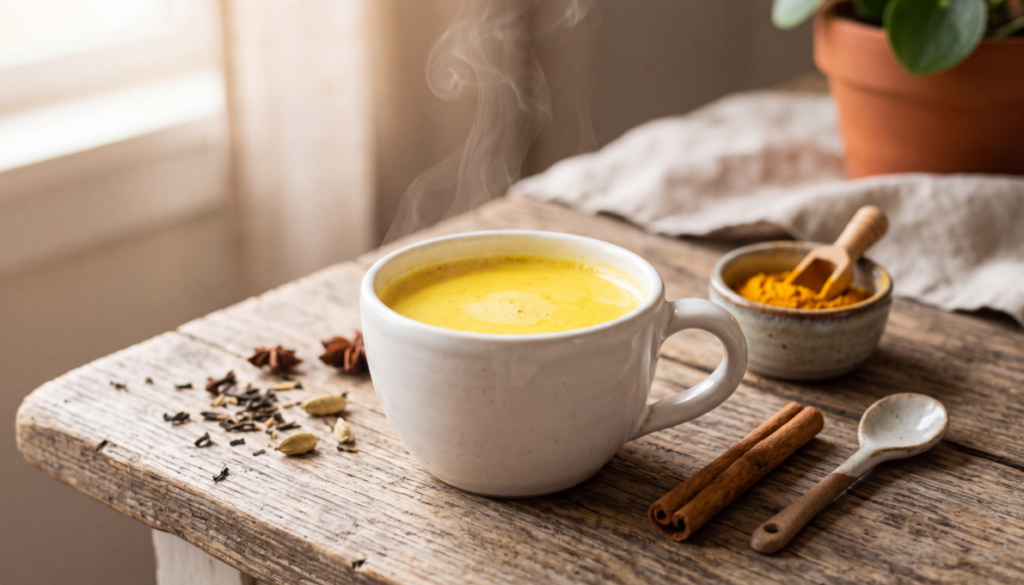
Curcumin: The Compound Behind Turmeric Health Benefits
Curcumin’s biggest limitation isn’t its potency — it’s absorption. On its own, curcumin has poor bioavailability, meaning the body struggles to absorb and use it efficiently.
A widely cited study published in Planta Medica found that combining curcumin with piperine, the active compound in black pepper, increased its bioavailability by up to 2,000% . This is why many curcumin supplements now include black pepper extract on their labels.
Fat also plays a role. Since curcumin is fat-soluble, consuming turmeric with a source of healthy fat — olive oil, coconut milk, or nuts — improves absorption compared to taking it with water alone.
Read also: “Iron Deficiency Anemia: Causes, Symptoms, Treatment, and Prevention“
Anti-Inflammatory and Antioxidant Effects of Turmeric
Chronic low-grade inflammation is associated with numerous long-term health conditions, and this is where curcumin’s research base is strongest. Studies suggest curcumin can inhibit molecules that trigger inflammation at the cellular level, including certain enzymes and signaling proteins involved in the body’s inflammatory response.
On the antioxidant side, curcumin neutralizes free radicals and also stimulates the body’s own antioxidant enzymes, creating a two-layer defense against oxidative stress. This dual action is part of why turmeric appears frequently in research on aging, skin health, and metabolic conditions.
Quick fact: The World Health Organization’s Joint Expert Committee on Food Additives has set an acceptable daily intake for curcumin at 0–3 mg per kilogram of body weight, underscoring that even natural compounds have defined safety thresholds .

Turmeric for Joint Pain and Arthritis Relief
Joint health is one of the most searched topics connected to turmeric, and for good reason. Several clinical trials have compared curcumin extracts to standard anti-inflammatory approaches for osteoarthritis symptoms, with a number showing comparable reductions in joint pain and stiffness over several weeks of use.
The proposed mechanism is straightforward: by reducing inflammatory markers in and around the joint, curcumin may ease the swelling and discomfort associated with wear-and-tear arthritis. Results vary by dosage, formulation, and individual response, which is why consistency and proper absorption matter more than the amount used in a single serving.
People dealing with autoimmune-related joint conditions, such as rheumatoid arthritis, should note that turmeric is not a replacement for prescribed treatment — it functions as a complementary approach at best.
Turmeric and Heart Health
Cardiovascular research on curcumin focuses largely on endothelial function — the health of the thin membrane lining blood vessels. Poor endothelial function is an early marker for heart disease, and some studies suggest curcumin supplementation may improve it, similarly to the effects seen with moderate exercise in certain populations.
Curcumin has also been studied for its potential to influence LDL cholesterol oxidation, a step in the process that contributes to arterial plaque buildup. While the data is promising, most of these findings come from short-term studies with concentrated curcumin extracts rather than dietary turmeric alone, so the practical impact of adding turmeric to meals is likely more modest.
Turmeric, Memory, and Brain Function
Interest in turmeric for cognitive health centers on brain-derived neurotrophic factor (BDNF), a protein linked to the growth and survival of neurons. Lower BDNF levels have been associated with depression and age-related cognitive decline.
Preliminary research indicates curcumin may help increase BDNF levels, which has led to further investigation into its potential role in memory support and mood regulation. This area of study is newer and less established than turmeric’s anti-inflammatory research, so claims about “boosting brain power” should be treated as promising rather than proven.
Read also: “Omega-3 Benefits: Why Fish Oil is Essential“
How to Maximize Turmeric Health Benefits in Daily Life
Not all forms of turmeric deliver the same results. The table below compares the most common options based on curcumin concentration and how well the body absorbs them.
| Turmeric Form | Curcumin Content | Absorption Level | Best Use Case |
|---|---|---|---|
| Raw turmeric root | Low (natural, variable) | Low | Cooking, fresh juices |
| Turmeric powder | Moderate | Low without fat/piperine | Everyday meals, golden milk |
| Standardized curcumin extract | High (often 95%) | Moderate to high | Targeted supplementation |
| Curcumin + piperine supplement | High | Highest | Clinical-level absorption goals |
To get practical value from turmeric, follow these steps:
- Pair it with black pepper. Even a pinch of ground pepper alongside turmeric meaningfully improves curcumin absorption.
- Add a fat source. Cook turmeric with olive oil, ghee, or coconut milk instead of relying on water-based dishes alone.
- Choose standardized extracts for targeted goals. If the aim is joint or inflammation support, a labeled curcumin percentage matters more than raw turmeric quantity.
- Be consistent. Most clinical benefits were observed with daily use over several weeks, not single doses.
- Watch for interactions. Turmeric can interact with blood-thinning medications and certain gastrointestinal conditions, making moderation important for specific groups.
Turmeric health benefits are real, but they are dose-dependent and absorption-dependent — sprinkling turmeric on food occasionally will not replicate what clinical studies achieve with concentrated, bioavailable curcumin.
Turmeric earns its reputation through curcumin, the compound driving its anti-inflammatory, antioxidant, joint-support, cardiovascular, and cognitive research. The catch is absorption: raw turmeric alone delivers far less than a well-formulated extract paired with piperine and fat. Turmeric health benefits are best realized through consistent, informed use rather than occasional sprinkling on meals. If joint pain, inflammation, or cognitive support are the goal, understanding dosage and bioavailability makes the real difference — not just adding more spice to the plate.
Important disclaimers
The information in this article is intended for educational and informational purposes only and does not replace the evaluation or guidance of a qualified healthcare professional. Always consult a doctor before making any decisions about treatment, supplementation, or diagnosis, especially if you take medication or have an existing health condition.
Frequently Asked Questions
Is turmeric safe to take every day?
For most healthy adults, turmeric in food amounts or standard supplement doses is considered safe for daily use. High-dose curcumin supplements should follow the acceptable daily intake guidance and be discussed with a doctor if used long-term.
How much turmeric should I take for inflammation?
Studies on inflammation typically use standardized curcumin extracts ranging from 500 mg to 2,000 mg daily, often combined with piperine for absorption. Culinary turmeric powder alone provides a much smaller dose than these clinical amounts.
Does turmeric interact with any medications?
Yes. Turmeric can interact with blood thinners, diabetes medications, and certain acid-reducing drugs due to its effects on blood clotting and blood sugar. Anyone on these medications should talk to a healthcare provider before starting supplementation.
Can turmeric help with arthritis pain?
Some clinical trials show curcumin extracts producing pain and stiffness reduction comparable to standard anti-inflammatory approaches for osteoarthritis. Results vary by individual, dosage, and formulation used.
What is the difference between turmeric and curcumin?
Turmeric is the whole spice, while curcumin is the specific active compound within it responsible for most documented health effects. Curcumin makes up only 2% to 9% of turmeric by weight.
Why does turmeric need black pepper to work better?
Piperine, the active compound in black pepper, blocks certain liver enzymes that break down curcumin too quickly, allowing more of it to enter the bloodstream. This combination can increase curcumin absorption dramatically compared to turmeric alone.
Are there side effects of taking too much turmeric?
High doses can cause digestive discomfort, nausea, or diarrhea in some people. Very high supplemental doses over long periods may also affect liver function, which is why sticking to recommended amounts matters.

My relationship with health and wellness began on a personal level, looking for practical ways to improve my own routine: more movement, more mindful eating, and basic oral care habits that, over time, made a real difference in my quality of life. It was this ongoing process of learning — testing, researching, and adjusting — that motivated me to share what I learn with others on the same journey.