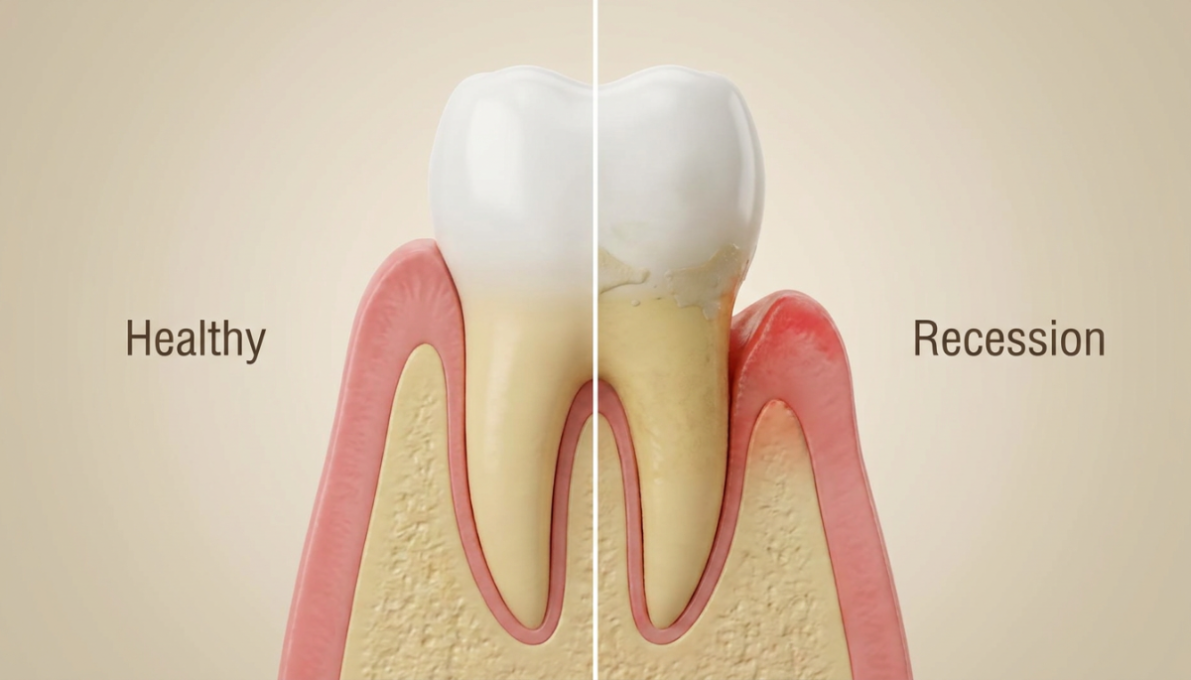
Gum recession happens when the gum tissue surrounding the teeth pulls back, exposing more of the tooth or its root. The most common gum recession causes include poor oral hygiene, aggressive brushing, gum disease, genetics, hormonal shifts, and teeth grinding. Left unaddressed, it can lead to sensitivity, root decay, and even tooth loss over time.
If you’ve ever noticed a tooth looking slightly “longer” than it used to, or felt a jolt of sensitivity when sipping something cold, you may already be living with early gum recession. It’s one of those dental issues that creeps up quietly. There’s rarely a single dramatic moment—just small changes that build up over months or years until the gum line has shifted noticeably.
Understanding why this happens matters because gum recession isn’t just a cosmetic concern. Once gum tissue recedes, it generally doesn’t grow back on its own, and the exposed root surface is softer and more vulnerable to decay than the enamel above the gum line. Recognizing the causes early gives you a real chance to slow or stop the process before it progresses further.
This article breaks down the main causes of gum recession, the warning signs worth paying attention to, and practical steps that can help protect your gum health going forward.
What Is Gum Recession, Exactly?
Gum recession refers to the gradual loss of gum tissue around a tooth, which exposes more of the tooth’s surface or root. It can affect a single tooth or several teeth at once, and it often develops asymmetrically—meaning one side of the mouth may be affected more than the other, depending on habits like brushing pressure or chewing patterns.
The gum tissue acts as a protective seal, keeping bacteria away from the tooth root and the bone underneath. When that seal recedes, the root becomes exposed to plaque, temperature changes, and mechanical wear, which is why sensitivity is usually one of the first symptoms people notice.
Common Causes of Gum Recession
Several distinct factors can trigger or accelerate gum recession, and in many people, more than one cause is at play simultaneously.
- Periodontal (gum) disease: Bacterial infections in the gum tissue break down the fibers and bone that hold teeth in place, causing gums to pull away gradually.
- Aggressive or improper brushing: Brushing too hard, using a hard-bristled toothbrush, or brushing in a harsh back-and-forth motion can physically wear away gum tissue over time.
- Poor oral hygiene: Insufficient brushing and flossing allows plaque to harden into tartar, which irritates and inflames the gums, eventually pushing them back.
- Genetics: Some people are simply born with thinner gum tissue or teeth positioned closer to the surface of the jawbone, making them more prone to recession regardless of hygiene habits.
- Hormonal changes: Fluctuations during puberty, pregnancy, and menopause can make gum tissue more sensitive and susceptible to recession.
- Tobacco use: Smoking and chewing tobacco contribute to sticky plaque buildup that’s harder to remove and directly irritates gum tissue.
- Teeth grinding and clenching (bruxism): Excessive force on teeth, often during sleep, can put stress on the gums and supporting bone.
- Misaligned teeth or bite issues: When teeth don’t line up evenly, some areas take on more pressure than others, wearing down the gum line unevenly.
- Piercings and trauma: Lip or tongue piercings can repeatedly rub against the gums, and physical trauma from injury can also cause localized recession.
A quick way to think about it: gum recession is rarely caused by one isolated event. It’s usually the cumulative result of mechanical wear, bacterial activity, or biological predisposition acting together over an extended period.
Warning Signs You Shouldn’t Ignore
Catching gum recession early makes a real difference in how manageable it is. Some signs tend to show up well before the recession becomes visually obvious.
Tooth sensitivity to hot, cold, or sweet foods is often the earliest indicator, since the exposed root has less natural protection than enamel. Longer-looking teeth, where more of the tooth surface is visible than before, is another common sign, especially when comparing recent photos to older ones. Notches near the gum line, sometimes called abfraction lesions, can also form where the tooth structure has worn down close to receding gums. Some people also notice visible roots, a change in bite feel, or bleeding gums during brushing or flossing, which usually points to active inflammation rather than recession alone.
Read also: “Cosmetic Dentistry Options: Costs, Types & Results“
How Gum Recession Typically Progresses
Recession doesn’t usually happen overnight—it tends to move through recognizable stages, though the pace varies significantly from person to person.
| Stage | What’s Happening | Typical Symptoms |
|---|---|---|
| Early | Slight gum inflammation, minor tissue pulling back | Mild sensitivity, occasional bleeding when brushing |
| Moderate | Root surface starts to become visible | Noticeable sensitivity, tooth appears slightly longer |
| Advanced | Significant root exposure, possible bone loss | Visible root, tooth mobility risk, higher decay risk |
Because early stages often produce only mild symptoms, many people don’t seek evaluation until the recession has already become moderate or advanced.
Who’s More Likely to Develop Gum Recession
Certain groups face a higher likelihood of gum recession due to a combination of biological and lifestyle factors. People over 40 tend to show more recession simply due to cumulative wear over decades, while those with a family history of gum disease or thin gum tissue often see recession appear earlier in life. Smokers and users of smokeless tobacco face elevated risk because these products both irritate gum tissue and mask early symptoms like bleeding. People who grind their teeth at night, wear orthodontic appliances that shift tooth position, or have misaligned bites also tend to experience uneven, localized recession in specific areas of the mouth.
When to See a Dentist
Persistent tooth sensitivity that doesn’t improve, visible changes in gum height, or bleeding that continues beyond a few days are all reasonable prompts to schedule a dental evaluation rather than waiting it out. A dentist can measure the depth of recession, check for underlying bone loss, and determine whether the cause is mechanical (like brushing technique) or bacterial (like gum disease), which changes the entire treatment approach.

Practical Steps to Help Prevent Further Recession
While some causes—like genetics—can’t be changed, several daily habits meaningfully reduce the risk of gum recession worsening.
- Switch to a soft-bristled toothbrush and use gentle, circular motions instead of aggressive back-and-forth scrubbing.
- Floss daily to remove plaque from areas a toothbrush can’t reach, particularly along the gum line.
- Address teeth grinding, often with a nightguard, if you or a partner notice clenching during sleep.
- Reduce or quit tobacco use, since it directly worsens plaque buildup and gum irritation.
- Schedule regular dental cleanings so tartar buildup—something a toothbrush alone can’t remove—gets cleared before it causes damage.
- Correct bite or alignment issues if a dentist identifies uneven pressure contributing to localized recession.
Read also: “Dental Floss Effectiveness: What Science Really Shows“
Treatment Options Overview
When recession has already occurred, treatment depends largely on severity and whether an underlying condition like gum disease is present.
| Approach | Best For | What It Involves |
|---|---|---|
| Improved hygiene routine | Very early, mild recession | Soft brush, better technique, daily flossing |
| Scaling and root planing | Recession linked to plaque/tartar buildup | Deep cleaning below the gum line |
| Desensitizing treatments | Sensitivity from exposed roots | Topical agents or dental bonding over exposed areas |
| Gum graft surgery | Moderate to advanced recession | Tissue is added to cover exposed roots and rebuild the gum line |
None of these approaches reverses recession the way regenerating lost tissue naturally would—rather, they aim to halt progression, reduce sensitivity, and in surgical cases, restore coverage over the exposed root.
Bringing It All Together
Gum recession develops gradually, usually from a mix of mechanical habits, bacterial activity, and individual biological factors like genetics or hormonal shifts. Recognizing the early signs—sensitivity, subtle changes in gum height, occasional bleeding—gives you a real window to slow things down before the recession becomes more difficult to manage. Small, consistent habits around brushing technique, flossing, and regular dental visits tend to matter more than any single fix. If you’ve noticed any of the warning signs discussed here, bringing them up at your next dental visit is a reasonable next step.
Important disclaimers
The information in this article is intended for educational purposes only and does not replace evaluation or guidance from a licensed dental professional. Always consult a dentist before making decisions about diagnosis or treatment related to your gum health.
Frequently Asked Questions
Can receded gums grow back on their own?
No, gum tissue that has receded generally does not regenerate naturally. Treatments like gum grafting can help cover exposed roots, but the original tissue does not regrow without intervention.
Is gum recession always caused by gum disease?
No, gum recession can result from mechanical causes like aggressive brushing, teeth grinding, or misaligned teeth, even without any bacterial infection present.
Does gum recession hurt?
Gum recession itself is often painless in early stages, though the exposed root frequently causes sensitivity to hot, cold, or sweet foods and drinks.
How fast does gum recession progress?
The speed varies widely depending on the cause; recession linked to gum disease can progress faster than recession caused purely by mechanical wear, which tends to be slower and more gradual.
Can brushing too hard really cause gum recession?
Yes, using a hard-bristled brush or excessive pressure with a back-and-forth motion is one of the most common mechanical causes of localized gum recession.
Is gum recession reversible with better hygiene alone?
Improved hygiene can stop recession from worsening and reduce inflammation, but it does not restore gum tissue that has already been lost.
Should teeth grinding be treated even if it hasn’t caused visible damage yet?
Yes, addressing bruxism early, often with a nightguard, can prevent the gradual gum and enamel wear that grinding causes over time.