A thyroid health guide helps you recognize early warning signs of thyroid dysfunction, including unexplained fatigue, sudden weight changes, mood shifts, and irregular heart rate, which often point to hypothyroidism or hyperthyroidism. Understanding these signals, combined with practical nutrition and lifestyle strategies, supports better hormone balance and overall well-being. Early recognition typically leads to faster diagnosis and better outcomes.
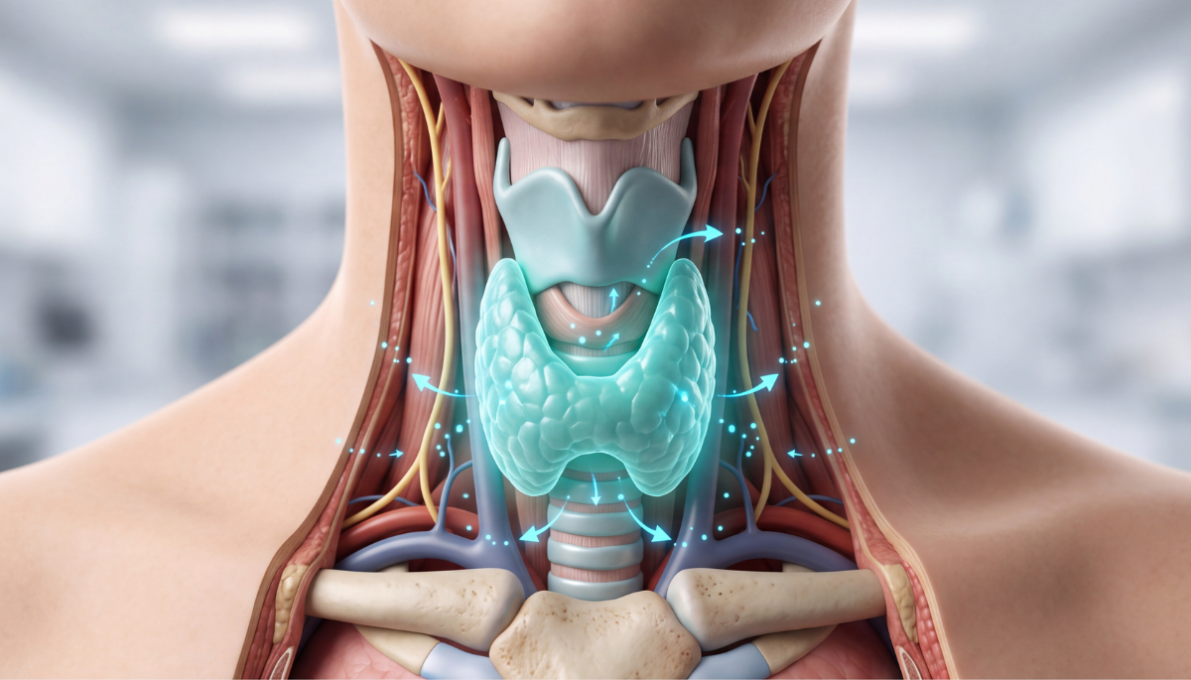
Millions of people live with a thyroid condition without realizing it, often mistaking symptoms for stress, aging, or a busy lifestyle. That disconnect matters because the thyroid, a small butterfly-shaped gland at the base of the neck, regulates metabolism, heart rate, body temperature, and even mood. According to the American Thyroid Association, more than 12% of the U.S. population will develop a thyroid condition at some point in their life, and up to 60% of those affected are unaware of their condition.
This guide breaks down the most common signs of thyroid problems, explains what causes them, and outlines evidence-based ways to support thyroid function through diet, lifestyle, and medical care. Whether you are noticing subtle changes in energy or have already received a diagnosis, understanding how this gland works is the first step toward taking control of your health.
Understanding Your Thyroid: The Body’s Metabolic Control Center
The thyroid produces two main hormones, thyroxine (T4) and triiodothyronine (T3), which travel through the bloodstream and influence nearly every cell in the body. These hormones control how fast the body burns energy, how the heart beats, and how the digestive system functions.
Hormone production is regulated by a feedback loop involving the pituitary gland, which releases thyroid-stimulating hormone (TSH) to signal the thyroid to produce more or less T3 and T4. When this feedback loop is disrupted, either too little or too much hormone circulates, leading to noticeable symptoms throughout the body.
Hypothyroidism occurs when the thyroid does not produce enough hormones, slowing down bodily functions. Hyperthyroidism is the opposite: excess hormone production speeds up metabolism and bodily processes. Both conditions fall under the broader umbrella of thyroid disease, and both require different approaches to diagnosis and treatment.

Common Signs and Symptoms of Thyroid Problems
Thyroid symptoms often overlap with other conditions, which is one reason thyroid disease frequently goes undiagnosed for months or even years. Symptoms depend largely on whether hormone levels are too low or too high.
Fatigue, weight gain, and feeling cold constantly are hallmark signs of an underactive thyroid, while unexplained weight loss, rapid heartbeat, and anxiety often point toward an overactive one. Because these symptoms develop gradually, many people attribute them to everyday stress rather than a hormonal imbalance.
The table below compares the most common symptoms associated with each condition, which can help clarify whether further testing might be warranted.
| Symptom Category | Hypothyroidism (Underactive) | Hyperthyroidism (Overactive) |
|---|---|---|
| Energy levels | Persistent fatigue, sluggishness | Restlessness, difficulty sleeping |
| Weight changes | Unexplained weight gain | Unexplained weight loss |
| Temperature sensitivity | Feeling cold frequently | Feeling hot, excessive sweating |
| Heart rate | Slower than normal | Rapid or irregular heartbeat |
| Mood | Depression, low motivation | Anxiety, irritability |
| Skin and hair | Dry skin, hair thinning | Warm, moist skin |
| Digestion | Constipation | Frequent bowel movements |
| Menstrual cycle | Heavier or irregular periods | Lighter or irregular periods |
Not everyone experiences the full range of symptoms, and severity varies widely from person to person. Some individuals with mild thyroid dysfunction report no noticeable symptoms at all, which is why routine screening becomes especially important for those with risk factors.
Read also: “Turmeric Health Benefits: The Golden Spice Guide“
What Causes Thyroid Dysfunction
Thyroid problems typically stem from autoimmune conditions, nutrient imbalances, or structural changes in the gland itself. Identifying the underlying cause shapes the entire treatment approach.
The most frequent causes include the following:
- Hashimoto’s thyroiditis—an autoimmune condition where the immune system attacks thyroid tissue, gradually reducing hormone production and leading to hypothyroidism. It is the most common cause of an underactive thyroid in developed countries.
- Graves’ disease—another autoimmune disorder, but one that stimulates the thyroid to overproduce hormones, resulting in hyperthyroidism.
- Iodine imbalance—since iodine is essential for hormone synthesis, both deficiency and excessive intake can disrupt normal thyroid function.
- Thyroid nodules—small growths within the gland that are usually benign but can sometimes overproduce hormones or, less commonly, indicate cancer.
- Postpartum thyroiditis—a temporary inflammation of the thyroid that can occur within the first year after giving birth.
- Medications and medical treatments—certain drugs, along with radiation therapy to the neck or chest, can interfere with thyroid function over time.
According to the National Institute of Diabetes and Digestive and Kidney Diseases (NIDDK), women are up to eight times more likely than men to develop thyroid conditions, largely due to hormonal fluctuations related to pregnancy, menstruation, and menopause.
How Doctors Diagnose Thyroid Problems
Diagnosing a thyroid disorder starts with a simple blood test but often extends to additional evaluations depending on the initial findings. Because symptoms alone are not reliable enough for diagnosis, laboratory confirmation is considered the standard first step.
The diagnostic process generally follows this sequence:
- TSH test—measures thyroid-stimulating hormone, the most sensitive initial screening tool for thyroid dysfunction.
- Free T4 and free T3 tests—evaluate the actual levels of circulating thyroid hormones to confirm whether they are too low or too high.
- Thyroid antibody tests—detect autoimmune markers associated with Hashimoto’s thyroiditis or Graves’ disease.
- Ultrasound imaging—used when a physical exam reveals lumps, swelling, or asymmetry in the neck.
- Fine-needle aspiration biopsy—reserved for nodules that show suspicious characteristics on imaging, helping rule out thyroid cancer.
A single abnormal TSH result does not automatically confirm a diagnosis. Physicians typically repeat testing and review the full hormone panel before recommending treatment, since factors like acute illness or certain medications can temporarily skew results.

Practical Ways to Support Thyroid Health Through Diet and Lifestyle
While medical treatment addresses hormone imbalances directly, certain nutritional and lifestyle habits play a supportive role in maintaining thyroid function over time. This does not replace medical care, but it complements it.
Several nutrients are directly involved in thyroid hormone production and regulation:
- Iodine—a core building block of thyroid hormones, found in iodized salt, seaweed, and dairy products.
- Selenium—supports the conversion of T4 into the more active T3 hormone; found in Brazil nuts, sunflower seeds, and fish.
- Zinc—plays a role in hormone synthesis and is present in shellfish, legumes, and pumpkin seeds.
- Vitamin D—deficiency has been linked to a higher prevalence of autoimmune thyroid disease in several observational studies.
- Iron—necessary for the enzyme that converts iodine into a usable form for hormone production.
Quick tip: Avoid taking iodine or selenium supplements without medical guidance. Excess intake of either nutrient can worsen certain thyroid conditions rather than improve them, particularly in people who already have Hashimoto’s thyroiditis or Graves’ disease.
Beyond diet, several lifestyle factors influence thyroid function indirectly. Chronic stress elevates cortisol levels, which can interfere with the conversion of T4 to T3. Poor sleep quality has similarly been associated with disrupted hormone regulation. Regular physical activity, even moderate walking, supports metabolic balance and helps offset some of the fatigue associated with thyroid dysfunction.
What supports thyroid health naturally? A balanced diet rich in iodine, selenium, and zinc, combined with adequate sleep and stress management, supports optimal thyroid hormone production. These habits work alongside medical treatment rather than replacing it.
Treatment Options for Thyroid Conditions
Treatment depends entirely on whether the thyroid is underactive or overactive, and on the underlying cause identified during diagnosis.
For hypothyroidism, the standard treatment is synthetic thyroid hormone replacement, most commonly levothyroxine, taken daily to restore normal hormone levels. Dosage is adjusted gradually based on follow-up TSH testing, typically every six to eight weeks until levels stabilize.
For hyperthyroidism, treatment options are more varied and depend on severity, age, and whether the patient plans to become pregnant. Common approaches include:
| Treatment Approach | How It Works | Typical Use Case |
|---|---|---|
| Antithyroid medications | Reduce hormone production directly | Mild to moderate Graves’ disease |
| Radioactive iodine therapy | Destroys overactive thyroid tissue | Persistent or severe hyperthyroidism |
| Beta-blockers | Manage symptoms like rapid heartbeat | Short-term symptom control |
| Surgical removal (thyroidectomy) | Removes part or all of the gland | Large goiters, suspected cancer, or treatment failure |
According to the Mayo Clinic, most patients who undergo treatment for hyperthyroidism see significant symptom improvement within several weeks, though full hormone stabilization can take longer depending on the chosen therapy.
Read also: “Iron Deficiency Anemia: Causes, Symptoms, Treatment, and Prevention“
When to See a Doctor: Risk Factors and Red Flags
Certain groups face a higher likelihood of developing thyroid problems and should consider more frequent screening, even in the absence of obvious symptoms.
Risk factors that warrant closer monitoring include a family history of thyroid disease; being over the age of 60, having another autoimmune condition such as type 1 diabetes or celiac disease; a personal history of radiation exposure to the neck; recent pregnancy; and being female, given the significantly higher prevalence in women.
Red flags that should prompt a medical visit sooner rather than later include a visible lump or swelling in the neck, difficulty swallowing, unexplained rapid or irregular heartbeat, persistent fatigue that does not improve with rest, and sudden, unexplained weight changes in either direction. According to the Cleveland Clinic, untreated thyroid conditions can eventually contribute to heart problems, infertility, and, in severe cases, myxedema coma or thyroid storm, both of which are medical emergencies.
Recognizing the signs of thyroid problems early, whether it is unexplained fatigue, rapid heartbeat, or shifts in weight, makes a meaningful difference in how quickly and effectively the condition can be managed. This thyroid health guide has covered how the gland functions, what causes it to malfunction, how doctors confirm a diagnosis, and which lifestyle habits genuinely support hormone balance. Thyroid disorders are common, often manageable, and rarely something to face without support. If any of these signs feel familiar, consider it a reason to pay closer attention to your body rather than dismiss it as ordinary stress.
Important disclaimers
The information in this article is for educational and informational purposes only and does not replace the evaluation or guidance of a qualified healthcare professional. Always consult a doctor before making any decisions about diagnosis or treatment related to your thyroid health.
Frequently Asked Questions
What are the earliest signs of a thyroid problem?
Early signs often include unexplained fatigue, changes in weight, sensitivity to temperature, and mood changes. These symptoms develop gradually and are frequently mistaken for stress or normal aging.
Can thyroid problems be reversed with diet alone?
Diet supports thyroid function but cannot reverse autoimmune conditions like Hashimoto’s or Graves’ disease on its own. Medical treatment, combined with supportive nutrition, offers the most effective approach.
How is hypothyroidism different from hyperthyroidism?
Hypothyroidism means the thyroid produces too little hormone, slowing metabolism and causing fatigue and weight gain. Hyperthyroidism means it produces too much, speeding up metabolism and causing weight loss and rapid heartbeat.
Who should get their thyroid checked regularly?
Women over 35, anyone with a family history of thyroid disease, people with other autoimmune conditions, and those experiencing unexplained fatigue or weight changes should consider regular screening.
Is thyroid disease more common in women?
Yes, women are up to eight times more likely than men to develop thyroid conditions, largely due to hormonal changes during pregnancy, menstruation, and menopause.
Can stress affect thyroid function?
Chronic stress raises cortisol levels, which can interfere with the conversion of T4 into active T3 hormone. While stress alone does not cause thyroid disease, it can worsen existing symptoms.
Do thyroid nodules always require treatment?
Most thyroid nodules are benign and do not require treatment beyond monitoring. Only nodules that show suspicious features on ultrasound or grow significantly typically require biopsy or further intervention.

My relationship with health and wellness began on a personal level, looking for practical ways to improve my own routine: more movement, more mindful eating, and basic oral care habits that, over time, made a real difference in my quality of life. It was this ongoing process of learning — testing, researching, and adjusting — that motivated me to share what I learn with others on the same journey.