Tooth extraction recovery typically takes 7 to 10 days for the gum tissue to close, although complete bone healing inside the socket can take several months. Recovery speed depends on the tooth’s location, whether the extraction was simple or surgical, and how closely aftercare instructions are followed. Most people resume normal eating and daily activities within a week.
Losing a tooth, even when it’s medically necessary, tends to bring more anxiety than the procedure itself deserves. The extraction is usually quick, but what happens in the hours and days afterward determines whether healing goes smoothly or turns into a painful setback. A staggering number of dental complications after extractions come not from the surgery, but from what patients do—or don’t do—in the first 24 to 72 hours.
According to the National Institute of Dental and Craniofacial Research, tooth extractions remain one of the most common oral surgical procedures performed in the United States, with millions carried out annually for reasons ranging from severe decay to impacted wisdom teeth. Despite how routine the procedure is, misinformation about aftercare is widespread—from myths about brushing too soon to confusion over which foods are actually safe.
This guide walks through tooth extraction recovery stage by stage, covers the real differences between simple and surgical extractions, explains how to manage pain and swelling at home, and flags the warning signs that mean it’s time to call your dentist rather than wait it out.
What Happens Inside Your Mouth After an Extraction
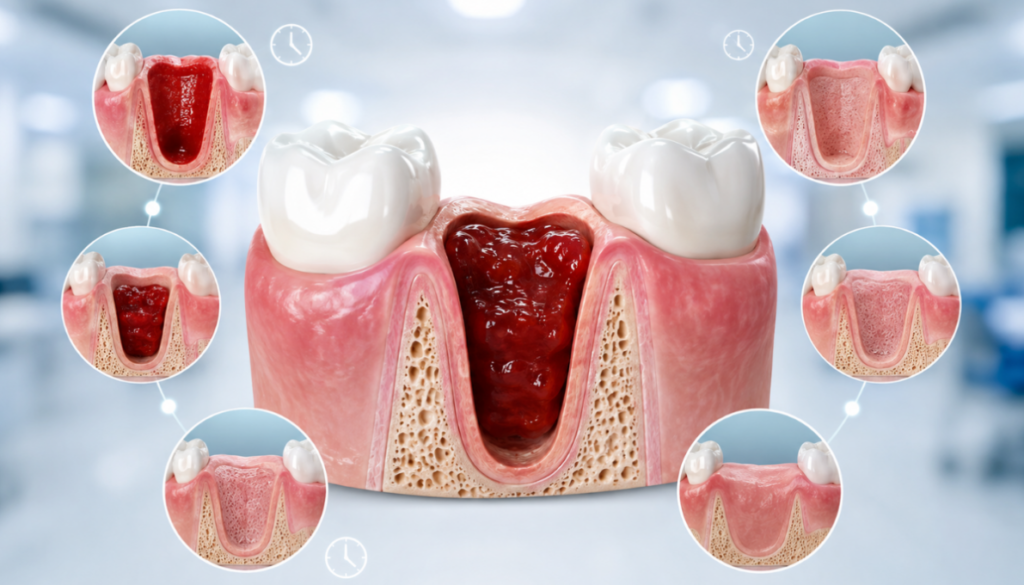
When a tooth is removed, it leaves behind an open socket—essentially a small wound in the jawbone covered only by gum tissue and, ideally, a stable blood clot. That clot is not just a byproduct of bleeding; it’s the foundation of the entire healing process. It seals the socket, protects the underlying bone and nerve endings, and creates the scaffold that new tissue will grow into.
Tooth extraction recovery unfolds in overlapping phases. Soft tissue at the surface closes relatively fast, often within a week, while the bone underneath remodels much more slowly, sometimes taking three to six months to fully reshape. This is why a socket can look and feel “healed” on the outside long before the underlying bone has finished its work.
Two things commonly disrupt this process early on: dislodging the clot through vigorous rinsing, suction, or trauma, and introducing bacteria before the wound has sealed. Both are largely preventable with basic precautions in the first 48 to 72 hours.
Tooth Extraction Recovery Timeline: Day by Day
Recovery doesn’t happen all at once—it moves through predictable stages, and knowing what’s normal at each point helps you catch problems early instead of panicking over expected discomfort.
- Day 1 (first 24 hours): Bleeding should slow significantly within a few hours. Some oozing and swelling are normal. The blood clot is fragile—avoid rinsing, spitting forcefully, or using straws.
- Days 2–3: Swelling often peaks around day two before starting to subside. Bruising on the cheek near the extraction site is common, especially after surgical removals.
- Days 4–7: Pain and swelling should be noticeably improving. Soft tissue at the socket opening begins closing over.
- Week 2: Most people are back to normal eating, though the extraction site may still feel slightly tender to pressure.
- Weeks 3–4: Gum tissue is typically fully closed. Any residual sensitivity is usually mild.
- Months 1–3+: Bone remodeling continues beneath the surface, gradually filling and reshaping the socket, even though there’s nothing visible or noticeable happening day to day.
If pain increases sharply after day three instead of improving, that’s a signal worth paying attention to rather than dismissing as “just part of healing.”
Read also: “Fluoride in Toothpaste: Benefits & Safety Explained“
Simple vs. Surgical Extraction: How Recovery Differs
Not all extractions are equal, and recovery expectations should be adjusted based on which type was performed.
| Factor | Simple Extraction | Surgical Extraction |
|---|---|---|
| Tooth condition | Fully erupted, visible above gum | Impacted, broken, or below gum line |
| Procedure method | Local anesthesia, forceps removal | Incision, possible bone or tooth sectioning |
| Typical swelling | Mild | Moderate to significant |
| Stitches needed | Rarely | Often |
| Soft tissue healing time | 5–7 days | 7–14 days |
| Common examples | Loose or decayed front teeth | Impacted wisdom teeth, fractured molars |
Surgical extractions, common with impacted wisdom teeth, involve more tissue disruption and naturally come with a longer, more uncomfortable early recovery window.
Do’s and Don’ts for the First 72 Hours
The first three days set the tone for the entire tooth extraction recovery process. What feels like a minor slip—sipping a drink through a straw or rinsing a bit too hard—can dislodge the protective clot and undo days of healing.
What to do:
- Bite gently on the gauze pad for 30–45 minutes to help the clot form.
- Apply an ice pack to the outside of the cheek in 15-minute intervals during the first day to control swelling.
- Keep your head elevated, even while sleeping, to reduce throbbing.
- Stick to lukewarm, soft foods like yogurt, mashed potatoes, or broth.
- Rest for at least 24 hours and avoid bending over or heavy lifting.
What to avoid:
- Smoking or using tobacco products, which significantly raises the risk of a painful complication called dry socket.
- Using straws, spitting forcefully, or rinsing vigorously for the first 24 hours.
- Touching the extraction site with your tongue or fingers, even out of curiosity.
- Eating crunchy, hard, or spicy foods that can irritate the socket.
- Vigorous exercise, which raises blood pressure and can restart bleeding.
Dry socket is a condition where the blood clot at an extraction site is lost or dissolves before healing occurs, exposing bone and nerve tissue. It causes intense, radiating pain that typically starts two to four days after extraction.
Managing Pain, Swelling, and Bleeding at Home
Some discomfort is expected—the goal isn’t to eliminate it entirely but to keep it manageable while the wound stabilizes.
Mild to moderate pain usually responds well to over-the-counter pain relievers taken as directed on the label. Swelling responds best to ice during the first 24 hours, then switches to warmth afterward, which helps improve blood flow and speeds tissue repair. Light bleeding or pink-tinged saliva can persist for a day or two; this is different from active, bright-red bleeding that soaks through gauze repeatedly, which needs prompt attention.
Salt water rinses, gently swished starting on day two (never day one), help keep the area clean without the force of regular rinsing or mouthwash.

What to Eat During Tooth Extraction Recovery
Food choices matter more than most people expect. The extraction site needs to stay undisturbed, which means texture matters just as much as nutrition in the early days.
| Safe to Eat (Days 1–3) | Foods to Avoid |
|---|---|
| Yogurt, applesauce, smoothies (no straw) | Chips, nuts, popcorn |
| Mashed potatoes, scrambled eggs | Spicy or acidic dishes |
| Broths and soups (lukewarm) | Alcohol |
| Oatmeal, pudding, ice cream | Hard bread or crusty rolls |
| Blended soft fruits and vegetables | Chewy candy or gum |
By days four to seven, most people can gradually reintroduce semi-soft foods, chewing carefully on the opposite side of the mouth from the extraction site.
Recognizing Dry Socket vs. Infection
These two complications are often confused, but they behave differently and require different responses.
| Symptom or Factor | Dry Socket | Infection |
|---|---|---|
| Onset | 2–4 days after extraction | Can appear anytime, often later |
| Pain pattern | Sudden, severe, radiates to ear/jaw | Gradual, throbbing, worsening |
| Appearance of socket | Visible bone, empty-looking socket | Pus, redness, swelling |
| Fever | Uncommon | Common |
| Odor/taste | Foul odor, bad taste | Foul odor, bad taste |
| Typical trigger | Clot dislodged, often linked to smoking | Bacterial contamination |
Research reviewed in studies indexed on PubMed suggests dry socket occurs in roughly 1–5% of routine extractions, but that rate climbs considerably—sometimes cited as high as 30%—for impacted lower wisdom teeth, largely due to the more invasive nature of the procedure and increased trauma to the bone.
Wisdom Tooth Extraction Recovery: What’s Different
Wisdom teeth, especially impacted ones, come with a distinct recovery profile compared to a simple extraction. Because these teeth often sit at awkward angles or partially beneath the gum, removal usually involves cutting gum tissue and sometimes sectioning the tooth itself.
Expect more pronounced swelling, occasional jaw stiffness that limits how wide you can open your mouth (called “trismus”), and a slightly longer window before eating solid foods comfortably. Stitches, if used, are often the dissolvable type and disappear on their own within one to two weeks.
Ice packs applied consistently during the first 24–48 hours make a noticeable difference in how much swelling develops with wisdom tooth removal specifically, more so than with simpler extractions.
Read also: “Dental Crown Procedure: Complete Guide & Care Tips“
Evidence-Based Tips to Speed Up Healing
A few habits consistently show up across dental guidance as genuinely useful for supporting faster, smoother tooth extraction recovery.
Keeping the head elevated, even during sleep, reduces blood pooling at the extraction site and noticeably cuts down on next-morning swelling. Staying hydrated supports tissue repair broadly, though water should be sipped rather than gulped forcefully in the first day. Avoiding nicotine—not just smoking, but vaping and chewing tobacco too—removes one of the single biggest risk factors for delayed healing, since nicotine constricts blood vessels and reduces oxygen flow to healing tissue. Gentle movement, like short walks, supports circulation without the blood pressure spike that comes from intense exercise.
According to guidance published by the American Dental Association, following these basic aftercare steps closes most of the gap between an uneventful recovery and one complicated by prolonged pain or infection.
When to Call Your Dentist
Most tooth extraction recovery proceeds without incident, but certain symptoms warrant a call rather than a wait-and-see approach: pain that worsens after day three instead of improving, fever above 100.4°F (38°C), pus or persistent foul taste, swelling that continues expanding after 48 hours, or bleeding that won’t slow after 24 hours of proper pressure. These aren’t signs to panic over, but they are signs worth addressing promptly rather than assuming they’ll resolve on their own.
Tooth extraction recovery is largely predictable once you understand the stages: clot formation in the first hours, soft tissue closure over the first week, and bone remodeling continuing quietly for months afterward. The habits that matter most—protecting the clot, avoiding tobacco, choosing soft foods, and watching for warning signs like dry socket or infection—are simple, but they make the difference between a smooth week and a painful setback. Paying attention to your body’s signals during those first few days goes a long way toward a comfortable, complication-free healing process.
Important disclaimers
The information in this article is intended for educational purposes only and does not replace evaluation or guidance from a qualified healthcare or dental professional. Always consult your dentist or oral surgeon before making decisions about your treatment or recovery.
Frequently Asked Questions
How long does tooth extraction recovery take?
Soft tissue typically closes within 7 to 10 days, while complete bone healing inside the socket can take three to six months. Most people resume normal activities and eating within a week.
When can I brush my teeth after a tooth extraction?
You can resume gentle brushing of other teeth the same day, avoiding the extraction site directly. Most dentists recommend waiting 24 hours before brushing near the socket itself.
Is it normal to have bad breath after a tooth extraction?
Mild odor from the healing socket can occur and usually resolves within a few days. Persistent, worsening bad breath combined with pain may indicate dry socket or infection and should be checked by a dentist.
How do I know if I have dry socket?
Dry socket typically causes intense pain starting two to four days after extraction, often radiating to the ear or jaw, along with visible bone in the socket and a foul taste or smell. It requires a dental visit for proper treatment.
Can I smoke after a tooth extraction?
Smoking significantly increases the risk of dry socket and delayed healing by restricting blood flow to the extraction site. Most dentists recommend avoiding tobacco for at least 48 to 72 hours, ideally longer.
What foods should I avoid during tooth extraction recovery?
Avoid hard, crunchy, spicy, or acidic foods, along with alcohol and anything requiring a straw, for the first few days. Soft foods like yogurt, mashed potatoes, and broths are safer choices while the socket heals.
Why does swelling get worse before it gets better after an extraction?
Swelling typically peaks around the second day as the body’s inflammatory response ramps up to support healing, then gradually subsides over the following days. This pattern is normal and doesn’t necessarily indicate a complication.

My relationship with health and wellness began on a personal level, looking for practical ways to improve my own routine: more movement, more mindful eating, and basic oral care habits that, over time, made a real difference in my quality of life. It was this ongoing process of learning — testing, researching, and adjusting — that motivated me to share what I learn with others on the same journey.