
Strength training benefits go far beyond bigger muscles — it improves bone density, metabolic health, cardiovascular function, and mental well-being. Research links resistance exercise performed twice weekly to lower all-cause mortality risk. This guide breaks down what the science actually shows and how to start safely.
Most people picture strength training as something reserved for bodybuilders or athletes chasing bigger numbers on a barbell. That image leaves out a much bigger story. Resistance exercise is one of the most thoroughly studied interventions in health science, with decades of data connecting it to longer lifespan, sharper cognition, and resilience against age-related decline.
The gap between what research shows and what most people actually do is striking. According to the CDC’s physical activity guidelines, fewer than a third of American adults meet the recommended two sessions of muscle-strengthening activity per week. That gap matters because the benefits compound over years, not weeks.
This article walks through what strength training does to your muscles, bones, metabolism, heart, and brain, then gives you a practical, beginner-friendly path to start building the habit correctly.
How Strength Training Builds Muscle and Strength
Muscle growth, or hypertrophy, happens through a process called progressive overload: gradually increasing the resistance, volume, or intensity of your workouts so muscle fibers are forced to adapt. When a muscle experiences mechanical tension beyond what it’s used to, microscopic tears form in the fibers. The body repairs these tears by fusing muscle protein strands, making the fiber slightly thicker and stronger than before.
This adaptation cycle explains why the first few weeks of a new program often bring rapid strength gains without much visible muscle change. Early improvements come mostly from neuromuscular adaptation — your nervous system learning to recruit muscle fibers more efficiently — before structural muscle growth catches up around the six to eight week mark.
Progressive overload is the gradual, systematic increase of stress placed on the body during exercise training, achieved by adding weight, reps, or sets over time. Without it, strength gains plateau regardless of how consistently someone trains.
Strength Training and Bone Health
Bone tissue responds to mechanical loading in a similar way muscle does. When resistance exercise applies stress to bone, specialized cells called osteoblasts activate and increase bone mineral density. This matters most for postmenopausal women and older adults, populations at elevated risk for osteoporosis and fracture.
The National Institute on Aging notes that weight-bearing and resistance exercises are among the few interventions shown to slow bone density loss in older adults. Weight-bearing activities like walking help too, but resistance training adds a targeted mechanical stimulus that cardio alone doesn’t replicate.
Practical tip: Compound, weight-bearing movements — squats, deadlifts, step-ups — apply more direct loading stress on the skeleton than isolation exercises like leg extensions, making them especially valuable for bone health.
Metabolic and Weight Management Benefits
Muscle tissue is metabolically active, meaning it burns calories even at rest. Each pound of muscle requires more energy to maintain than a pound of fat, so increasing lean mass raises resting metabolic rate over time. This is one reason strength training is often more effective for long-term weight maintenance than cardio alone, even though it may burn fewer calories during the session itself.
Resistance training also improves insulin sensitivity. Muscle contractions during exercise stimulate glucose uptake independent of insulin, and consistent training improves how efficiently cells respond to insulin signals afterward. This effect is significant enough that resistance exercise is recommended as part of type 2 diabetes management protocols in several clinical guidelines.
| Training Type | Primary Calorie Burn | Metabolic Effect | Best For |
|---|---|---|---|
| Strength training | During + after (afterburn effect) | Increases resting metabolic rate | Long-term body composition |
| Steady-state cardio | Primarily during session | Improves aerobic capacity | Cardiovascular endurance |
| High-intensity interval training | During + moderate afterburn | Improves both aerobic and anaerobic fitness | Time-efficient conditioning |
Read also: “Caffeine Effects on Health: Benefits, Risks & Limits“
Cardiovascular and Longevity Benefits
Strength training isn’t only about muscles and bones — it measurably affects cardiovascular risk and life expectancy. A widely cited meta-analysis found that muscle-strengthening activity was associated with a 10–17% reduction in all-cause mortality, independent of aerobic exercise habits. Combining resistance training with aerobic exercise produced even greater risk reduction than either alone.
According to Harvard Health Publishing, regular resistance training is associated with improvements in blood pressure, cholesterol profiles, and blood vessel function — effects traditionally attributed mainly to cardio. The mechanism likely involves reduced visceral fat, improved insulin sensitivity, and lower systemic inflammation, all of which strength training influences directly.
Strength training reduces cardiovascular risk not by replacing cardio, but by targeting different physiological pathways — improved body composition, insulin sensitivity, and inflammatory markers that aerobic exercise alone doesn’t fully address.
Mental Health and Cognitive Benefits
The mental health effects of resistance training are backed by a growing body of clinical research. Studies on adults with mild to moderate depression have found strength training programs produce symptom reductions comparable to some standard treatment approaches, likely through a combination of endorphin release, improved sleep quality, and the psychological effect of visible progress and mastery.
Cognitive benefits extend to older adults specifically. Resistance training has been linked to improved executive function and memory performance in several trials, with researchers hypothesizing that increased blood flow and growth factor release (such as brain-derived neurotrophic factor) during exercise support neuroplasticity.
Beyond biology, there’s a behavioral component worth naming honestly: strength training gives people a concrete, measurable form of progress. Watching a lift go from 20 pounds to 40 pounds over three months creates a sense of competence that translates into confidence outside the gym — something anecdotally reported by nearly every experienced lifter, and increasingly supported by self-efficacy research in exercise psychology.

Strength Training for Healthy Aging
Age-related muscle loss, known as sarcopenia, begins as early as the 30s and accelerates after 60 without intervention. Left unaddressed, it contributes to falls, loss of independence, and frailty. Strength training is the single most effective intervention for slowing or partially reversing this process, according to multiple longitudinal studies in gerontology.
Older adults who strength train regularly show measurable improvements in gait speed, balance, and functional capacity — the ability to perform daily tasks like climbing stairs or carrying groceries without assistance. These aren’t marginal gains; functional independence in later life is one of the strongest predictors of quality of life and reduced healthcare costs.
This is one area where age isn’t a barrier to starting. Research consistently shows that even adults in their 80s and 90s who begin resistance training for the first time see meaningful strength and mobility gains within weeks.
How to Start a Strength Training Routine
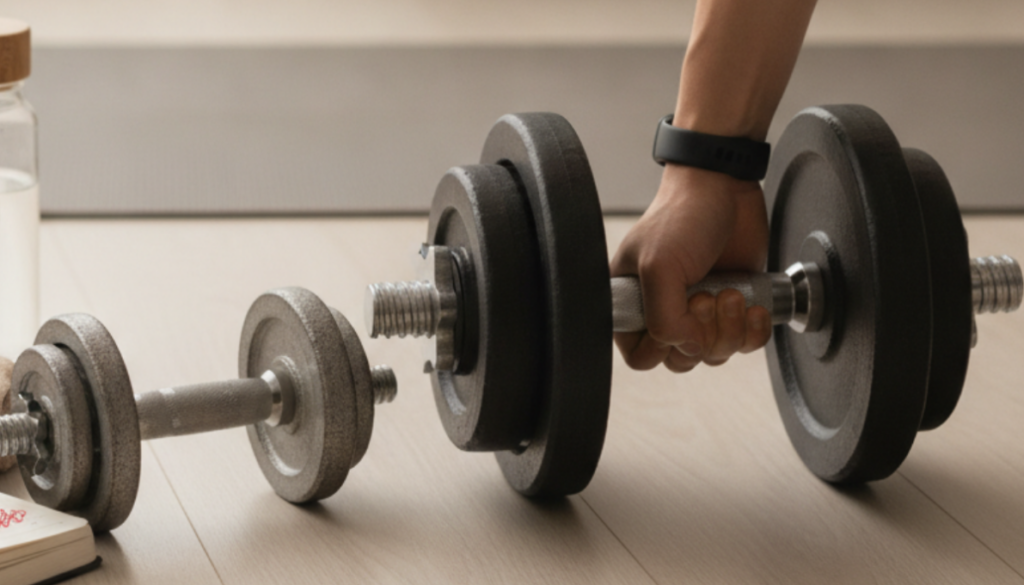
Starting doesn’t require a gym membership or expensive equipment, though both can help. What matters most in the beginning is consistency and proper form over intensity.
- Choose a training frequency of two to three sessions per week, allowing at least one rest day between sessions targeting the same muscle groups.
- Prioritize compound movements — squats, deadlifts, push-ups, rows — that work multiple muscle groups simultaneously and build functional strength efficiently.
- Start with a weight you can lift for 10-15 controlled repetitions before progressing to heavier loads.
- Track your workouts to apply progressive overload deliberately rather than guessing.
- Rest 48 hours between sessions targeting the same muscles, since muscle repair — not the workout itself — is when strength gains actually occur.
- Add complexity gradually, introducing new exercises or equipment only after mastering basic movement patterns.
| Equipment Type | Accessibility | Best For | Limitation |
|---|---|---|---|
| Bodyweight | Free, anywhere | Beginners, mobility, home workouts | Limited progressive overload long-term |
| Free weights (dumbbells/barbells) | Gym or home setup | Building functional strength, compound lifts | Requires learning proper form |
| Resistance machines | Gym-based | Isolating muscles, safer for injury recovery | Less functional carryover |
| Resistance bands | Very portable | Home use, rehab, warm-ups | Harder to precisely track progression |
Tip: If you’re new to lifting, two or three sessions of full-body training per week produce better long-term consistency and results than more elaborate five-day splits that are harder to sustain.
Read also: “Mental Health Importance: A Complete 2026 Guide“
Common Myths About Strength Training
A few misconceptions keep people away from resistance training or lead them to train inefficiently once they start.
- “Lifting weights makes women bulky.” Significant muscle hypertrophy requires specific training volume, caloric surplus, and typically higher testosterone levels than most women naturally have. Most women who strength train develop a toned, leaner appearance, not bulk.
- “You need to feel sore to know it worked.” Soreness reflects unfamiliar movement stress, not training effectiveness. Experienced lifters often make excellent progress with minimal soreness.
- “Cardio is better for fat loss.” Strength training builds metabolically active muscle tissue, which supports fat loss over the long term more effectively than cardio-only approaches, especially when combined with adequate protein intake.
- “Older adults shouldn’t lift weights.” As covered earlier, resistance training is one of the safest and most beneficial interventions available for older adults when properly programmed.
Strength training benefits reach well beyond aesthetics: stronger bones, better metabolic health, reduced cardiovascular risk, improved mental health, and greater independence with age all connect back to consistent resistance exercise. The research is clear, and the barrier to entry is lower than most people assume — two sessions a week with proper form is enough to start seeing meaningful change. If you’ve been on the fence about picking up a weight for the first time, the evidence suggests there’s little reason to wait any longer.
Important disclaimers
The information in this article is for educational purposes only and does not replace guidance from a qualified health professional. Consult a doctor or physical therapist before starting a new exercise program, particularly if you have existing health conditions, injuries, or are returning to exercise after a long period of inactivity.
Frequently Asked Questions
How often should I do strength training per week?
Most guidelines recommend two to three strength training sessions per week, targeting all major muscle groups, with at least one rest day between sessions working the same muscles.
Can strength training help with weight loss?
Yes. Strength training builds lean muscle mass, which increases resting metabolic rate and supports long-term fat loss, especially when combined with adequate protein intake and a modest calorie deficit.
Is strength training safe for older adults?
Yes, when properly programmed with appropriate loads and supervision if needed. Resistance training is one of the most effective interventions for preventing age-related muscle and bone loss.
How long does it take to see strength training results?
Neuromuscular strength gains often appear within two to four weeks, while visible muscle growth typically takes six to eight weeks of consistent training with progressive overload.
Do I need a gym to start strength training?
No. Bodyweight exercises like push-ups, squats, and lunges can build meaningful strength, especially for beginners, before progressing to free weights or resistance machines.
What’s the difference between strength training and weightlifting?
Strength training is the broader category, including bodyweight exercises, resistance bands, and machines. Weightlifting typically refers specifically to lifting free weights, such as barbells and dumbbells.
Can strength training improve mental health?
Yes. Studies link resistance training to reduced symptoms of depression and anxiety, likely through endorphin release, improved sleep, and the psychological benefits of measurable progress.

My relationship with health and wellness began on a personal level, looking for practical ways to improve my own routine: more movement, more mindful eating, and basic oral care habits that, over time, made a real difference in my quality of life. It was this ongoing process of learning — testing, researching, and adjusting — that motivated me to share what I learn with others on the same journey.