
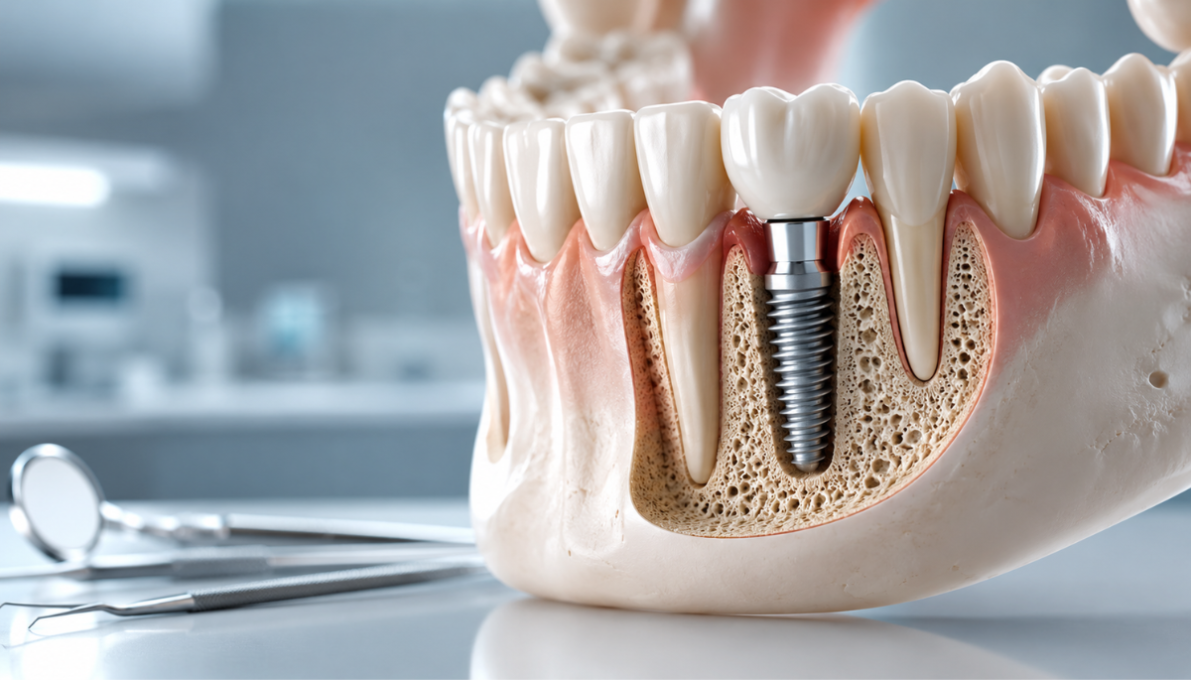
Dental implants are titanium posts surgically placed into the jawbone to replace missing tooth roots, then topped with a custom crown. They restore chewing function, prevent bone loss, and look like natural teeth. Costs typically range from $3,000 to $6,000 per tooth in the U.S., and success rates exceed 95% when placed by an experienced provider.
Losing a tooth changes more than your smile. It affects how you chew, how your jawbone holds its shape, and how confident you feel talking or eating in public. According to the American Dental Association, roughly 178 million Americans are missing at least one tooth, and over 40 million have no natural teeth remaining in one or both jaws. For decades, dentures and bridges were the only real options — both come with trade-offs like slipping, discomfort, or accelerated bone loss.
Dental implants changed that equation. Instead of sitting on top of the gum or relying on neighboring teeth for support, an implant fuses directly with the jawbone, functioning much like a natural tooth root. This guide walks through how implants work, what they cost, who qualifies, and what recovery actually looks like — so you can have an informed conversation with your dentist rather than walking in blind.
What Are Dental Implants and How Do They Work
A dental implant is not a single piece — it’s a three-part system designed to mimic the structure of a natural tooth.
The implant post is a small screw, usually made of titanium or zirconia, inserted directly into the jawbone. The abutment connects the post to the visible restoration, sitting just above the gumline. The crown is the artificial tooth itself, custom-shaped and color-matched to blend with surrounding teeth.
How Osseointegration Works
Osseointegration is the biological process where jawbone cells grow around and fuse with the titanium implant post, creating a stable anchor strong enough to support chewing forces. This process is the reason implants outlast almost every other tooth-replacement method.
Titanium is biocompatible, meaning the body doesn’t recognize it as a foreign object the way it might reject other materials. Over a period of three to six months, bone tissue gradually surrounds the implant surface, locking it in place. Once osseointegration is complete, the implant can handle biting forces comparable to a natural tooth root.
Research published through the National Institute of Dental and Craniofacial Research has documented this fusion process extensively, and it’s the biological basis for why implants — unlike dentures — actively help preserve jawbone density over time.
Read also: “Orthodontic Treatment Options: Braces vs Invisalign“
Benefits of Dental Implants Compared to Other Tooth-Replacement Options
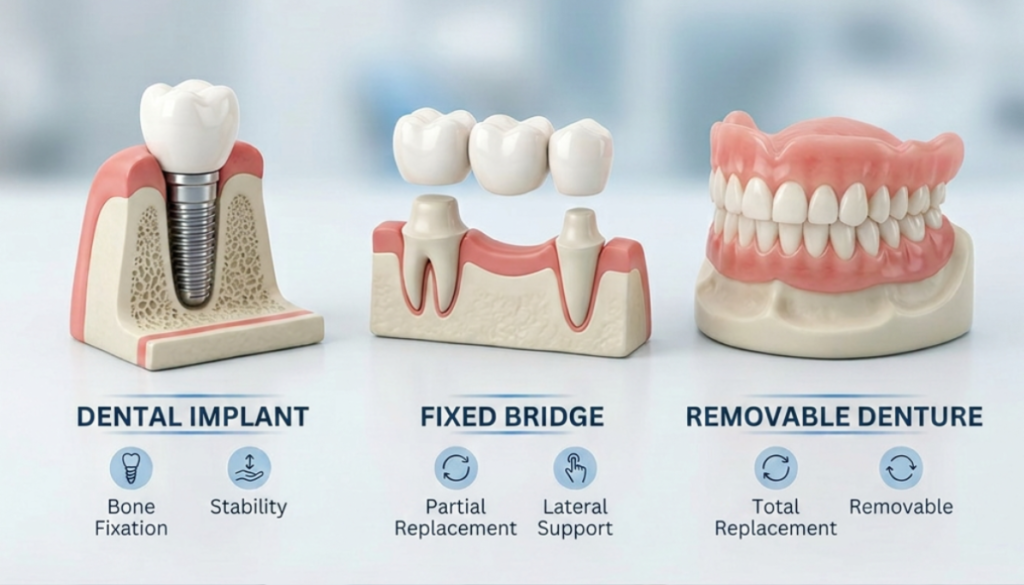
Not every missing tooth needs an implant, but when comparing long-term outcomes, implants consistently outperform bridges and dentures on durability, bone preservation, and daily comfort.
Dentures rest on the gums and can shift while eating or speaking. Bridges require grinding down healthy adjacent teeth to anchor the replacement, which can weaken those teeth over time. Implants avoid both problems because they stand independently, rooted in bone rather than depending on neighboring structures.
| Feature | Dental Implants | Dental Bridges | Dentures |
|---|---|---|---|
| Average lifespan | 15–25+ years (crown may need replacement) | 5–15 years | 5–10 years |
| Affects adjacent teeth | No | Yes, requires grinding down neighbors | No |
| Prevents jawbone loss | Yes | No | No |
| Stability while eating/speaking | High | Moderate | Variable, may shift |
| Daily maintenance | Brush and floss like natural teeth | Brush and floss, harder to clean underneath | Remove and clean nightly |
| Typical upfront cost | Higher | Moderate | Lower |
Beyond function, implants also preserve facial structure. When a tooth root is missing, the jawbone in that area gradually resorbs because it no longer receives the stimulation that chewing provides. Dentures can’t stop this process — implants can, because the post itself continues to stimulate bone the way a natural root would.
Types of Dental Implants
Not all implants are built the same way, and the right type depends on jawbone volume, the number of missing teeth, and overall oral health.
Endosteal Implants
Endosteal implants are the most common type, placed directly into the jawbone as a screw, cylinder, or blade shape. They’re the standard choice for patients with sufficient bone density and are used for single-tooth replacement as well as multi-tooth restorations.
Subperiosteal Implants
Subperiosteal implants sit on top of the jawbone, under the gum, rather than being drilled into it. They’re reserved for patients who don’t have enough healthy bone for endosteal implants and prefer not to undergo bone grafting.
All-on-4 and Full-Arch Implants
All-on-4 implants use four strategically angled posts to support an entire arch of replacement teeth, often eliminating the need for bone grafting even in patients with moderate bone loss. This approach has become popular for full-mouth restorations because it reduces surgery time and recovery compared to placing individual implants for every missing tooth.
Dental Implant Cost: What to Expect in 2026
Cost is usually the first question patients ask, and the honest answer is: it depends heavily on how many teeth need replacing and whether additional procedures like bone grafting are required.
| Procedure Type | Typical Cost Range (USD) |
|---|---|
| Single tooth implant (post + abutment + crown) | $3,000 – $6,000 |
| Bone graft (if needed) | $300 – $3,000 |
| All-on-4, per arch | $12,000 – $30,000 |
| Full-mouth implants (all teeth, both arches) | $24,000 – $50,000+ |
| Mini dental implants (per tooth) | $500 – $1,500 |
![]() Factors That Affect Implant Cost
Factors That Affect Implant Cost
Several variables push cost up or down. Geographic location plays a role — implants in major metropolitan areas often cost more than in smaller cities. The material used for the crown (porcelain versus zirconia) affects price. Whether the patient needs a bone graft or sinus lift before implant placement can add thousands to the total. Finally, the experience level of the oral surgeon or periodontist often correlates with cost, though not always with outcome quality.
Insurance and Financing Options
Most standard dental insurance plans classify implants as a cosmetic or elective procedure, which means coverage is often partial or nonexistent. Some medical insurance plans will cover implants when tooth loss results from trauma, cancer treatment, or a documented medical condition. Many dental offices offer in-house financing plans or work with third-party lenders like CareCredit to spread payments over 12 to 24 months, which makes the upfront cost more manageable for most patients.
Am I a Good Candidate? Requirements and Preparation
Implants have a high success rate, but they’re not automatically right for everyone. A few health and lifestyle factors matter more than people expect.
Adequate jawbone density is the biggest requirement — without it, the implant has nothing stable to fuse with. Patients with significant bone loss aren’t automatically disqualified; procedures like bone grafting or sinus lifts can rebuild the foundation needed for a successful placement.
Uncontrolled diabetes, active gum disease, and heavy smoking all reduce implant success rates because they interfere with healing and osseointegration. The American Academy of Periodontology notes that smokers face a notably higher implant failure rate than non-smokers, largely due to reduced blood flow to the gums and bone.
Age itself isn’t a barrier. Healthy adults of nearly any age can receive implants, provided their jawbone has finished growing (typically after age 18) and they don’t have uncontrolled systemic conditions that would compromise healing.
The Dental Implant Procedure and Recovery Timeline
The full process from consultation to final crown usually spans three to eight months, though the timeline varies based on whether bone grafting is needed.
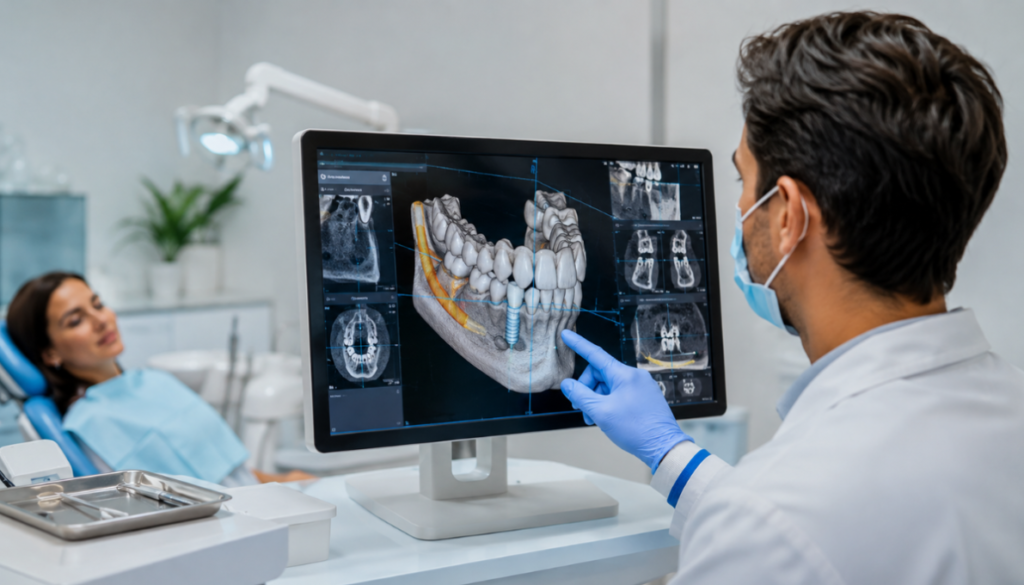
- Initial consultation and imaging. The dentist takes 3D scans to assess bone density and plan implant placement.
- Bone grafting, if needed. When bone volume is insufficient, a graft is placed and given three to six months to integrate before implant surgery.
- Implant placement surgery. The titanium post is surgically inserted into the jawbone under local anesthesia or sedation.
- Osseointegration healing period. Over three to six months, the bone fuses with the implant post.
- Abutment placement. A minor procedure attaches the connector piece once osseointegration is confirmed.
- Crown fitting. The custom-made crown is attached, completing the restoration.
What to Expect in the First 48 Hours
Mild swelling, bruising, and discomfort are normal after implant surgery and typically peak within the first two days. Most dentists prescribe pain relievers and recommend a soft-food diet for about a week. Ice packs applied in 20-minute intervals help control swelling during the first 24 to 48 hours.
Quick tip: Avoid using a straw for at least 3–5 days after surgery. The suction motion can dislodge the healing tissue and slow recovery, similar to the concern with dry socket after tooth extraction.
Long-Term Maintenance and Oral Hygiene
Implants don’t get cavities, but the surrounding gum tissue can still develop a condition called peri-implantitis — inflammation similar to gum disease — if plaque builds up around the base of the crown.
- Brush twice daily with a soft-bristled brush, paying attention to the gumline around the implant.
- Floss daily using implant-specific floss or a water flosser to clean under the crown.
- Schedule professional cleanings every six months, even though the implant itself can’t decay.
- Avoid chewing extremely hard foods (ice, hard candy) that could crack the crown.
Read also: “Teeth Sensitivity: Causes and Effective Treatment Options“
Long-Term Care, Risks, and Choosing the Right Dentist
Like any surgical procedure, implants carry some risk, though complication rates are low when performed by an experienced provider. Possible issues include infection at the implant site, nerve damage causing numbness or tingling, sinus complications for upper-jaw implants, and implant failure due to insufficient osseointegration.
Choosing a provider with specific training in implant dentistry — whether a periodontist, oral surgeon, or prosthodontist — meaningfully reduces these risks. Ask about their case volume, request before-and-after photos of similar cases, and confirm they use 3D imaging for surgical planning rather than relying solely on 2D X-rays.
Dental implants represent a significant investment of both time and money, but for most candidates, they deliver the closest possible replication of a natural tooth — in function, appearance, and longevity. Understanding the full process, from candidacy requirements to realistic cost ranges, puts you in a much stronger position to discuss options with your dentist and choose the path that fits your health and budget.
If you’re considering implants, the next step is a consultation with a qualified provider who can assess your bone density and walk you through a personalized treatment plan.
Important disclaimers
The information in this article is intended for educational and informational purposes only and does not replace the evaluation or guidance of a qualified healthcare or dental professional. Always consult a licensed dentist or oral surgeon before making decisions about your treatment or diagnosis.
Frequently Asked Questions
How long do dental implants last?
Dental implants themselves can last 15 to 25 years or longer with proper care, since the titanium post fuses permanently with the jawbone. The crown attached to the implant typically needs replacement every 10 to 15 years due to normal wear.
Are dental implants painful?
The surgical placement is performed under local anesthesia or sedation, so patients feel no pain during the procedure. Mild soreness and swelling are common for a few days afterward and are usually managed with over-the-counter or prescribed pain relievers.
What is the success rate of dental implants?
Dental implants have a success rate above 95% in healthy patients with adequate bone density. Success rates can drop for smokers, patients with uncontrolled diabetes, or those with insufficient jawbone volume who skip necessary bone grafting.
Can I get dental implants if I have bone loss?
Yes, bone grafting or a sinus lift procedure can rebuild jawbone density before implant placement. This adds several months to the overall treatment timeline but allows many patients with bone loss to become eligible candidates.
Does dental insurance cover implants?
Most standard dental insurance plans offer limited or no coverage for implants, treating them as elective or cosmetic. Some medical insurance plans provide coverage when tooth loss results from an accident, illness, or medically necessary extraction.
What’s the difference between dental implants and dentures?
Dental implants are surgically anchored into the jawbone and function like permanent, natural teeth, while dentures are removable appliances that rest on the gums. Implants also help preserve jawbone density, whereas dentures do not prevent the bone loss that naturally occurs after tooth extraction.